
Last updated November 22, 2026
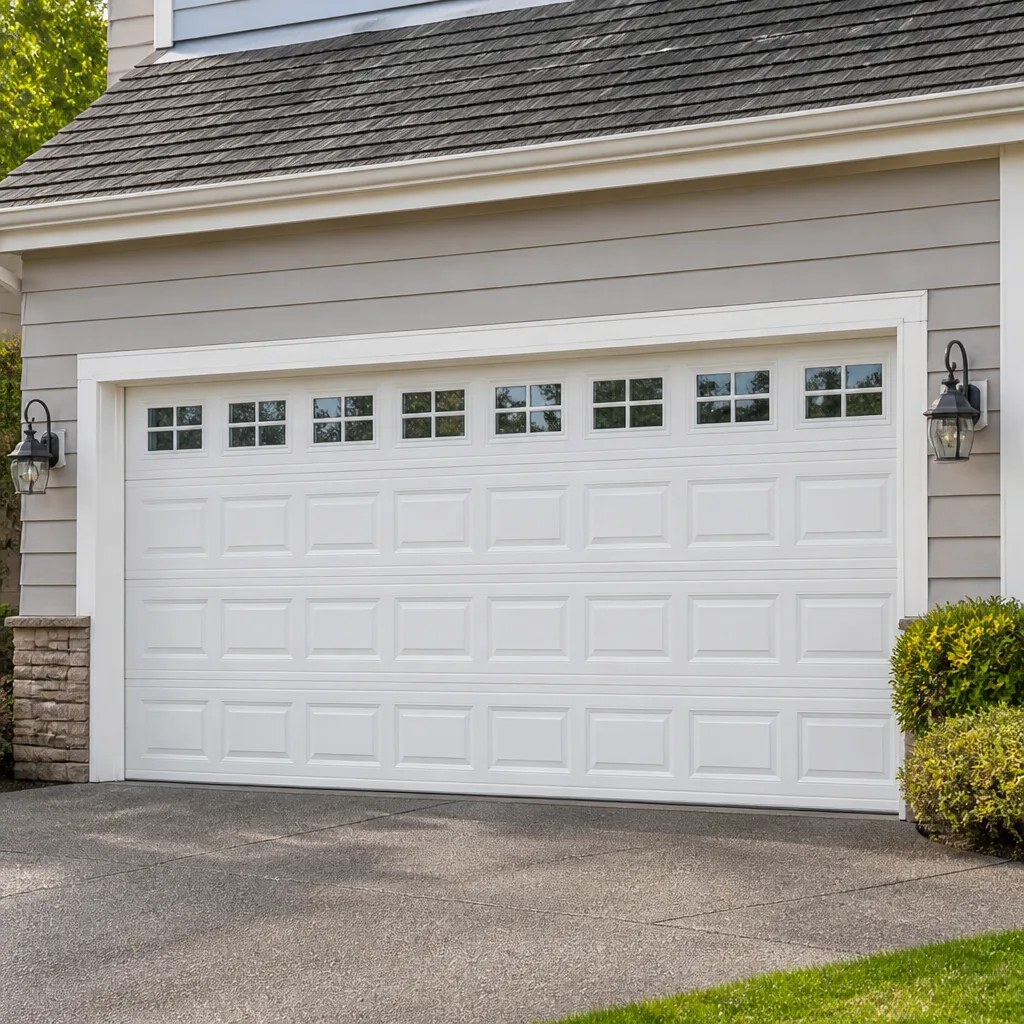 Raised-panel steel
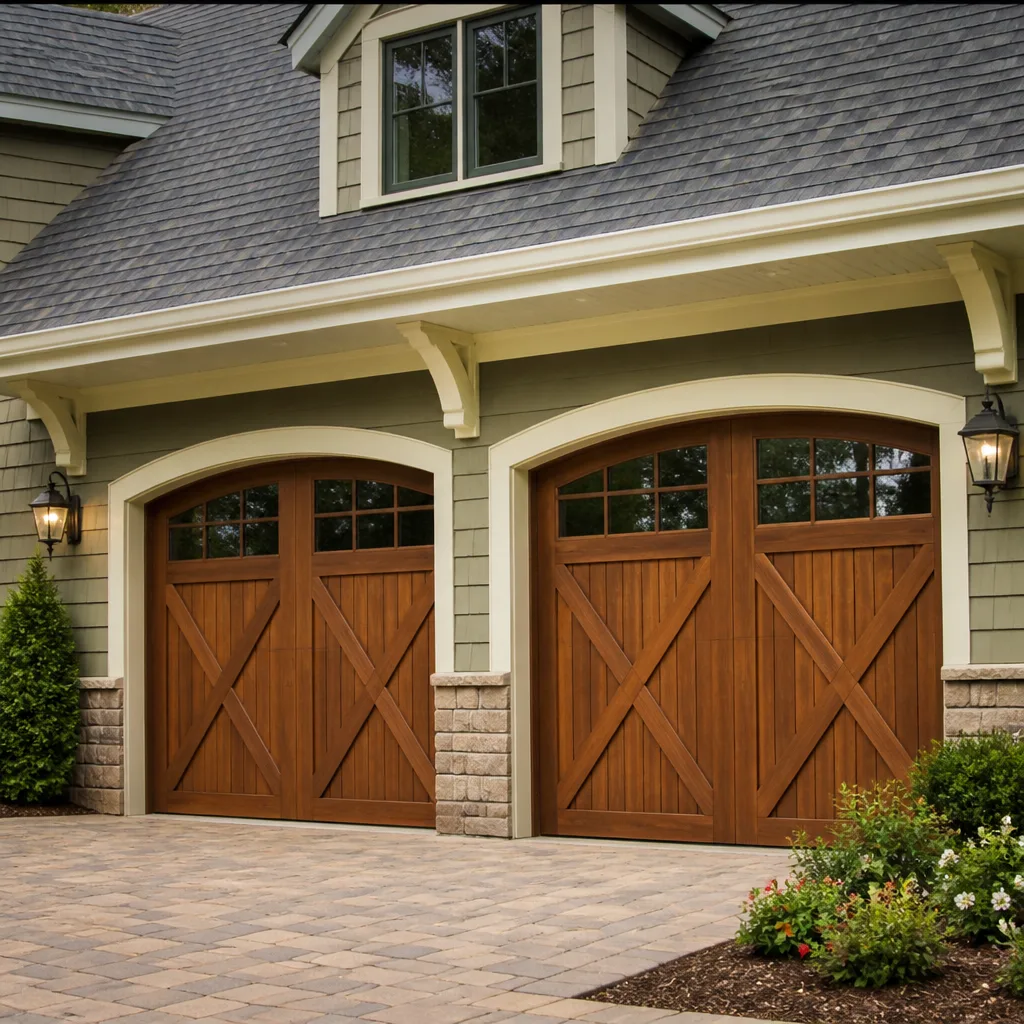 Carriage house
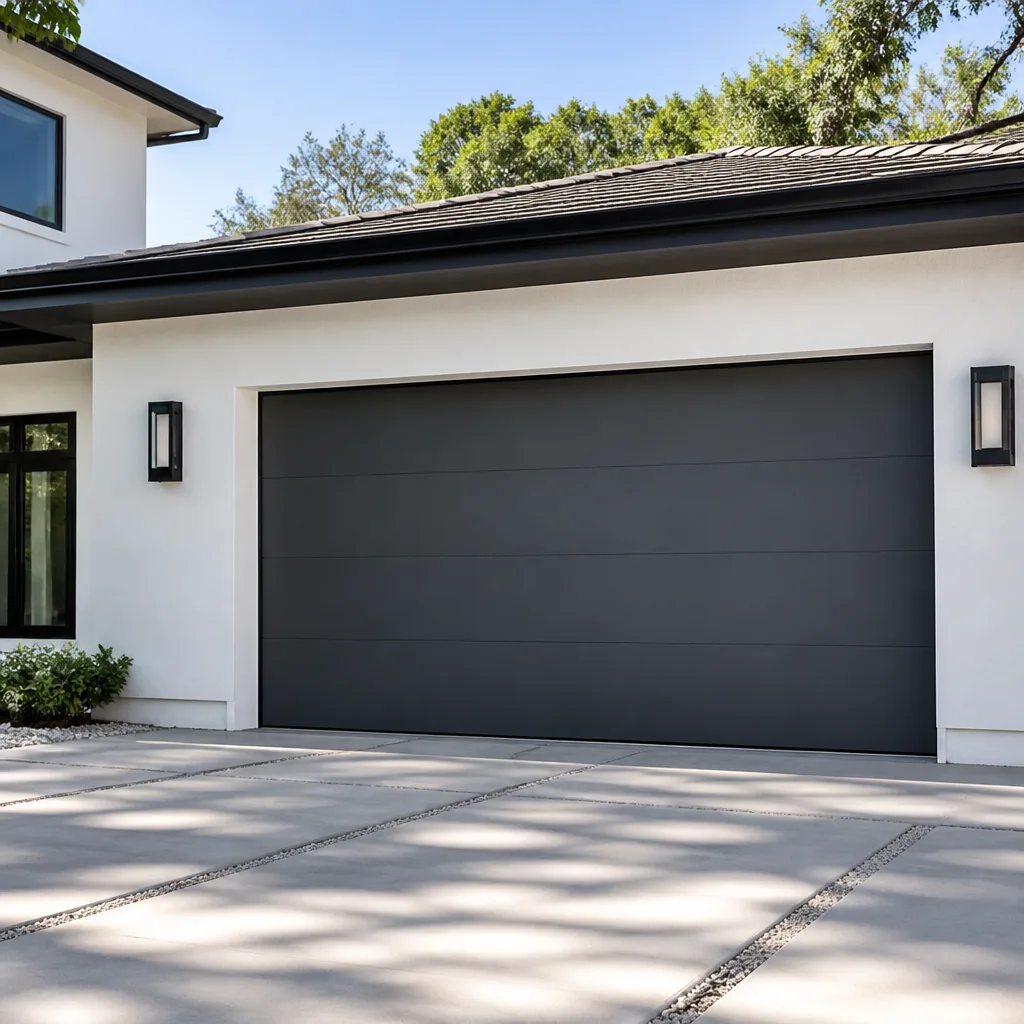 Modern flush
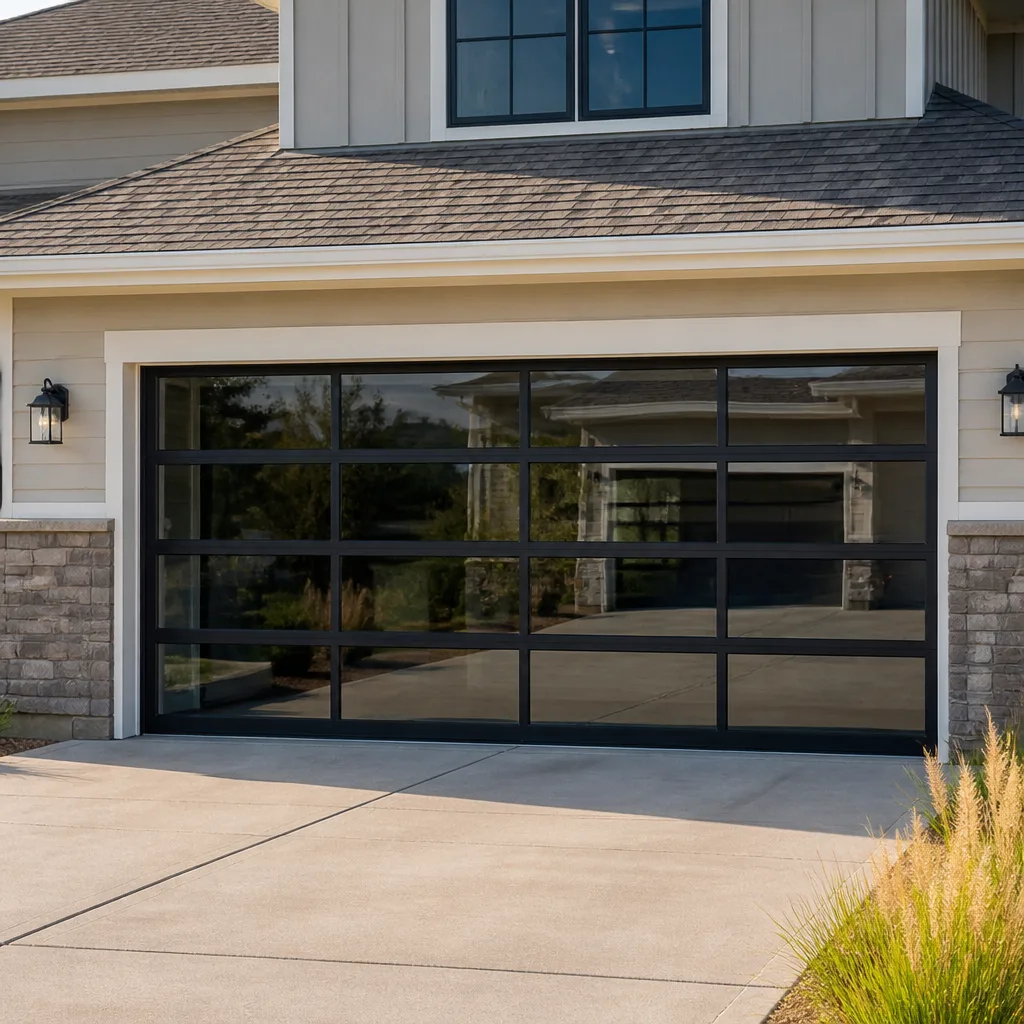 Full-view glass
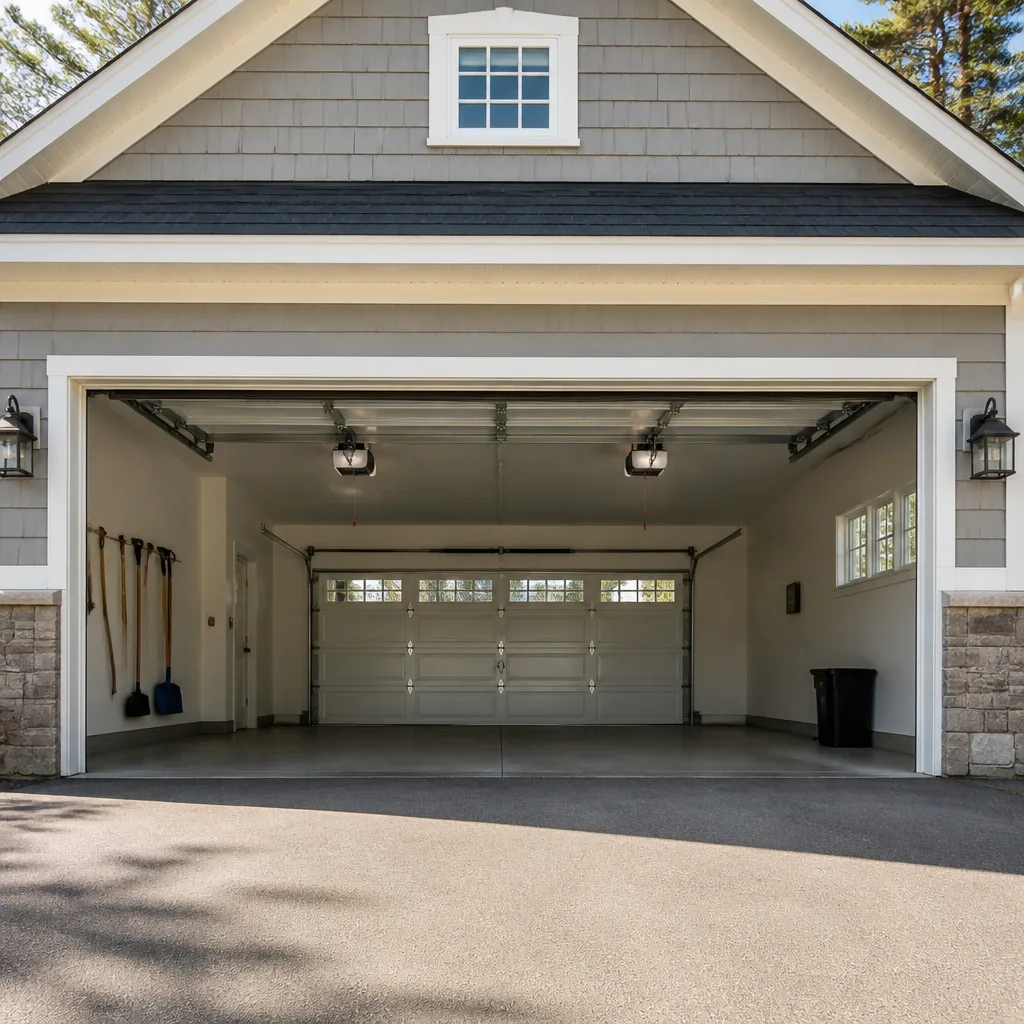 LiftMaster openers
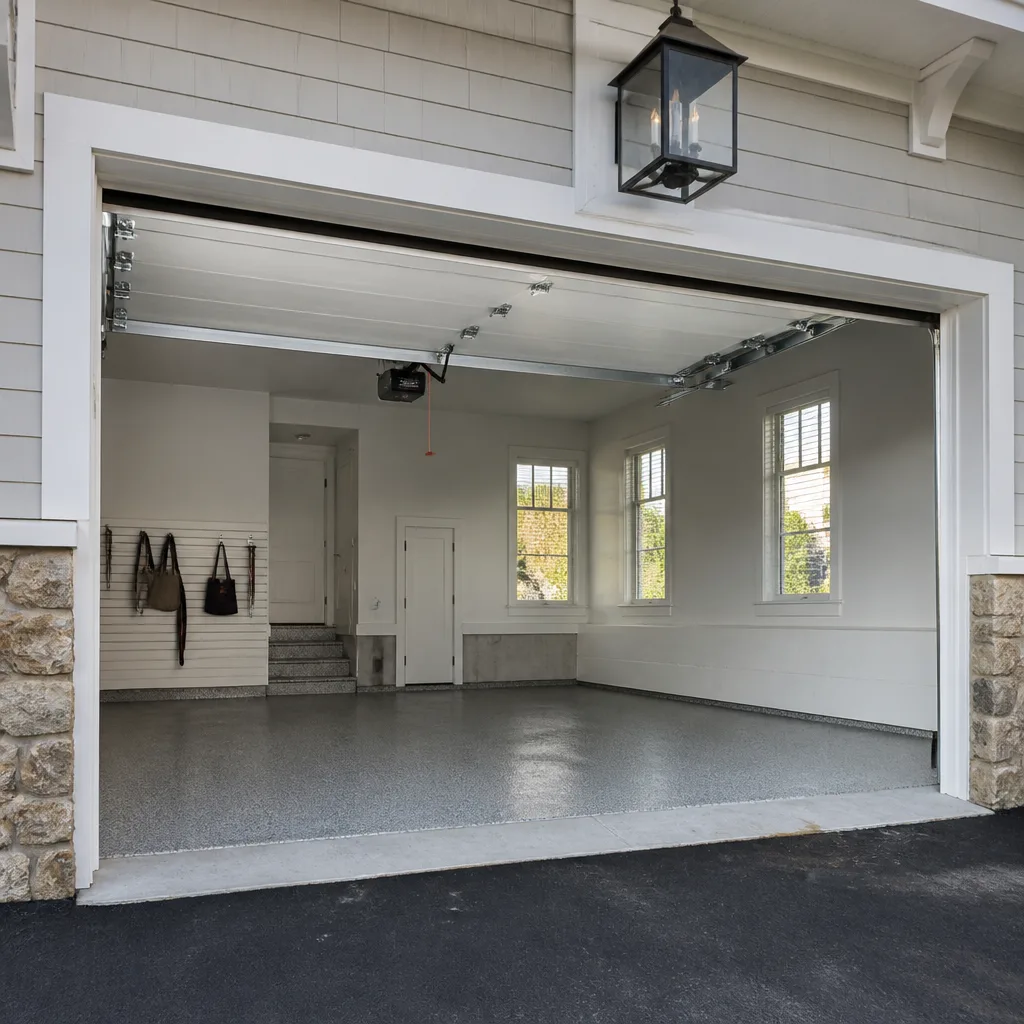 Chamberlain openers
Full 25-point door and opener safety check with every visit - springs, cables, rollers, tracks, and your LiftMaster or Chamberlain opener included
You get a price before we start. It does not change when the pro arrives.
Get your free estimateGarage Door Emergency Preparedness Guide for Miramar Homes
Most garage door advice treats emergencies as one thing. They’re not. In Miramar, your door can fail in two very different ways, and the preparation for each is different. The first is mechanical: a snapped spring, a dead opener, a door that won’t budge and a car trapped inside. The second is weather: a summer storm or hurricane season system that turns the door into the largest opening on your house. During Hurricane Irma, garage door failures were one of the leading causes of residential structural damage in Broward County, and not because the doors blew in. It’s because homeowners didn’t know how to manually secure them once the power was gone and the opener was the only thing holding the door shut.
This guide covers both scenarios with the same seriousness. You’ll learn how to release and re-engage the most common openers found in Miramar homes, how to secure a door from the inside when nothing works, what hardware to check before hurricane season, what to do in the first 30 minutes after a storm, and exactly what to tell a dispatcher so help arrives with the right parts. Most of it takes an afternoon to learn and costs nothing.
Quick Answer
Garage door emergency preparedness in Miramar means having three things ready before you need them: the manual release procedure for your specific opener brand, a way to lock the door from the inside when the opener can’t, and a pre-season hardware inspection of the bolts, brackets, and hinges that hold the door to the wall. Know your door’s brand and model, keep the phone number for emergency repair on hand, and never force a damaged door open or closed. That’s the whole system, and it takes less time to set up than a trip to the hardware store.
Styles & brands we work with
- Raised-panel steel
- Carriage house
- Modern flush
- Full-view glass
- LiftMaster openers
- Chamberlain openers
Table of Contents
- The Two Kinds of Garage Door Emergencies in Miramar
- How to Use the Manual Release on Common Openers
- How to Safely Re-Engage the Opener After Power Returns
- How to Secure a Garage Door From the Inside
- Pre-Hurricane Season Hardware Check
- The First 30 Minutes After a Storm
- What to Tell the Dispatcher
- Building a Garage Door Emergency Kit
The Two Kinds of Garage Door Emergencies in Miramar
Treat these as separate plans, because the steps don’t overlap. A mechanical failure usually happens on an ordinary morning: you hit the button, the door grinds partway up, and it stops. The door is now stuck, the car is inside, and if the door is open you have a security problem until it’s resolved. A storm event is different. The power drops, the door is closed but unlatched in the mechanical sense, and the wind has a large surface to push against. Your home’s pressure envelope depends on that door holding.
The mechanical plan is about knowledge and access. You need to know how to disengage your opener, where your emergency release is, and which brand you own so a technician can arrive prepared. The weather plan is about hardware and inspection. You need to know that your track bolts are tight, your hinges aren’t rusted through, and your door’s rated wind capacity matches what your home needs.
Miramar’s climate reinforces this. Winters are mild, which lulls a lot of homeowners into skipping maintenance. But the season that matters here is summer and fall, when heat expands metal tracks and storm systems test every fastener on the door. A door that squeaked through winter can fail in July. Neighborhoods like Sunset Lakes and Silver Lakes, where homes are close together and wind funnels between buildings, are exactly where a loose bracket becomes a bigger problem.
When the mechanical failure happens, a same-day repair is often the difference between a minor inconvenience and a security concern. We work on the brand you already have, which means we can diagnose a failed opener or a broken spring quickly rather than guessing. Our technicians have up to 8 years of experience diagnosing both mechanical and storm-related door failures. For the general repair side of this work, see garage door repair.
How to Use the Manual Release on Common Openers
Every residential opener has a manual release, and almost every homeowner learns about it at the worst possible moment. The release disconnects the door from the opener’s drive, letting you lift the door by hand. The mechanism differs slightly by brand, and the three brands most common in Miramar homes are LiftMaster, Chamberlain, and Genie. Here’s how to operate each one without breaking anything.
LiftMaster and Chamberlain openers use the same design, since they’re built on shared platforms. Look for a red or black pull handle hanging from a cord near the door. The key rule: pull it toward the door, never toward the opener. Pulling the wrong way can jam the trolley.
- Stand inside the garage with the door fully closed.
- Locate the release cord hanging from the trolley rail.
- Pull the handle straight down and slightly toward the door, not toward the motor unit.
- You’ll hear a click as the trolley disengages from the drive.
- Lift the door slowly by hand. If it feels extremely heavy, stop and call for help. A heavy manual door usually means a broken spring.
Genie openers often use a similar pull cord but with a different trolley design. The release is on the rail, and the same rule applies: pull toward the door, and never force it. Some Genie models have a release lever rather than a cord, so check yours before you need it. Craftsman openers follow the same manual disconnect logic and are worth checking if your door came with one.
Springs are the most dangerous part of your garage door system, so if the door is heavy when you lift it by hand, stop. That’s not something to push through.
What to check before you need this: find your release cord now, confirm it moves freely, and make sure nothing is stored in front of it. If the cord is missing or frayed, that’s a repair. For spring and opener issues together, look at garage door opener repair and garage door spring repair.
How to Safely Re-Engage the Opener After Power Returns
Re-engaging is where a lot of doors get damaged. Once power comes back, you can’t just hit the button and hope the trolley reconnects. If the door and trolley aren’t aligned, the opener will strain against a disconnected drive, and something will strip or break.
Here’s the safe sequence:
- With the door closed and resting on the ground, pull the release cord once more so the trolley travels free of the door.
- Use the wall button or remote to run the opener’s carriage back toward the door. Watch the trolley move.
- When the carriage reaches the door’s connect point, you’ll hear a click as the trolley re-latches. If it doesn’t latch, run the opener a few inches and try again.
- Test the door by running it through one full open-and-close cycle while you watch. If it jerks, reverses, or won’t travel fully, stop and call for diagnosis.
- Check the safety sensors on both sides of the door’s base. Re-align them if the door won’t stay closed.
If the door still won’t run after re-engagement, the problem is usually in the opener’s logic board or a limit switch, not the release. That’s a diagnostic repair, and forcing it will make it worse. For doors on LiftMaster, Chamberlain, Genie, and Craftsman systems, that’s a common call. In Miramar, the diagnosis is straightforward once we know the brand and model.
If you’re not sure it re-engaged correctly, don’t test it with your car underneath.
How to Secure a Garage Door From the Inside
When the opener is dead and there’s no secondary lock, a garage door is only as secure as the tension on its springs. It can be lifted from outside. That’s the scenario many Miramar homeowners face during a power outage. You need a manual way to hold the door closed from the inside that doesn’t depend on electricity.
- Slide locks or a deadbolt-style latch on both sides of the door are the simplest fix. Once the door is down, engage both. This takes the load off the opener and prevents lifting from the outside.
- A c-clamp on the track above a roller works as a temporary lock. Don’t over-tighten and don’t use it on a hollow track.
- A brace across the door’s back – a piece of wood or a manufactured brace – adds resistance if you’re worried about internal pressure during a storm.
What to check: make sure your slide locks actually engage the track cleanly and don’t bind. If you don’t have them, this is a $20 hardware item that takes ten minutes to fit. For doors without a secondary lock, it’s the single most useful preparedness upgrade you can make.
The point is not to improvise in an emergency. It’s to have a plan that doesn’t rely on power. A dead opener in Miramar is common during storm season. The door is still a door; it just needs a manual way to stay closed.
Pre-Hurricane Season Hardware Check
Inspectors looking at wind-load compliance review very specific parts of a garage door. You can run the same check yourself before the season starts, and it will tell you whether your door is likely to hold. The check covers bolts, brackets, hinges, and the door’s rated wind capacity.
- Track bolts. Every lag screw holding the vertical track to the wall should be tight and not stripped. Loose bolts are the most common failure in high wind.
- Hinges. Check each hinge for rust, cracking, or missing screws. Rusted hinges fail at the pin.
- Center bearing plate and brackets. Look for stress cracks where the torsion spring attaches. That’s a high-load area.
- Bottom bracket. It takes the full weight and cable tension. Inspect for deformation.
- Wind rating. Check the door’s sticker or label for its rated wind capacity. If your door isn’t rated for what your area requires, that’s a conversation to have with your city’s building department.
In a wind-load compliance review, an inspector also looks at the door’s attachment to the framing, not just the door itself. A door that’s rated for high wind but attached with undersized bolts is only as good as the bolts. This is where we usually find problems in Miramar homes: not the door, but the fasteners holding it. Older homes in neighborhoods like Miramar Isles often have doors that were never upgraded. Our technicians have up to 8 years of experience checking these systems, and a quick inspection before hurricane season can save a long repair after a storm. For new doors and upgraded wind-rated models, see our garage door installation page.
The First 30 Minutes After a Storm
If your door is visibly damaged after a storm, don’t touch it until you’ve done a safety check. The first rule: a door that’s drooping, off the track, or missing a panel is under load. Operating it can cause injury or further damage, and the springs may be in a dangerous state. Here’s what to do in the first half hour:
- Keep everyone clear. Don’t stand under or beside a damaged door. If it’s hanging, secure the area.
- Check for downed power lines near the door. If the opener is connected to damaged wiring, don’t touch the wall button.
- Look at the springs and cables. A broken spring is obvious – it’s hanging or the coils are separated. A snapped cable is also visible. Don’t touch either. These parts are under high tension.
- Test the door by hand only if it looks intact. Lift a few inches. If it’s heavy, stop. If it moves freely and the track looks straight, you can close it carefully and latch it.
- Document the damage with photos before any repair. This helps your insurer and helps a technician arrive prepared.
- Call for emergency repair. A storm-damaged door is not a weekend project.
If the door is jammed, the opener is intact, and the track is bent, the safest move is to leave it closed and call. Forcing a bent track will break rollers and can throw a spring. In Miramar, storm damage often means a panel replacement or track realignment, not a full door. A quick assessment on the phone can tell you which. We answer 24/7, and fast dispatch from 7am to 7pm Sunday through Friday. We also handle a full-service visit that covers the whole door system, from springs and cables to the opener and panels, so you’re not calling three different companies after one storm.
What to Tell the Dispatcher
The information you provide on the call is what determines how fast and how well the repair goes. A dispatcher who knows your brand, model, and symptom can dispatch a technician with the right parts on the first visit. Here’s exactly what a Miramar technician needs to hear:
- Your door’s brand and model. LiftMaster, Chamberlain, Genie, Craftsman, Clopay, Amarr, Wayne Dalton, or Raynor. The brand tells us which parts to bring.
- The symptom in plain terms. “Won’t open,” “opens halfway and reverses,” “spring broke,” “track is bent,” “door is hanging.”
- Whether the door is open or closed right now. That changes the repair priority.
- What you’ve already tried. If you pulled the manual release, say so. If you re-engaged it, say so.
- Whether a car is trapped. This is an urgent dispatch flag for us.
- Your address and which part of Miramar you’re in. Helpful for scheduling and for the technician to plan the visit.
- Photos if you can send them. A photo of the bracket or track tells a technician more than a description.
- Whether it’s a storm-related failure. Storm damage may involve panels or structural repair, not just a part swap.
The more accurate the information, the better the outcome. When you call (855) 593-6861, you’re talking to a team that works across multiple brands and diagnoses before recommending. That’s the difference between a same-day repair and a return visit. We answer 24/7. Fast dispatch from 7am to 7pm, Sunday through Friday. A call outside dispatch hours is booked into the next opening, Sunday through Friday, 7am to 7pm.
Building a Garage Door Emergency Kit
A small kit takes an hour to assemble and covers both scenarios in this guide. The goal is a box or shelf near the garage that has everything you’d need in the first 30 minutes of an emergency. Here’s what to put in it:
- Printed contact information for emergency repair, plus your door’s brand and model written down.
- Two slide locks or deadbolts if your door doesn’t already have them.
- A pair of c-clamps in a size that fits your track.
- A flashlight and spare batteries stored in the garage, not the house.
- A basic socket and wrench set for checking bolts, not for repairs.
- Photos of your door and opener labels saved to your phone.
- A notepad and pen for noting the symptom and the dispatcher’s instructions.
One thing not to include: any tool you’d use to remove a spring or cable. Those parts are under extreme tension, and working on them without training and the right tools can cause serious injury. Spring repair is handled in-house by our team for exactly this reason. If you’re on the fence about a spring that looks off, call for a professional inspection. The cost of a service visit is far less than an injury.
Every door in Miramar should have a kit like this, whether it’s a single-car door or a multi-door property. Property managers with several units can keep one kit per building and a shared contact list.
Common Mistakes to Avoid
- Pulling the manual release the wrong direction. On LiftMaster and Chamberlain openers, pulling toward the motor instead of the door can jam the trolley. Practice the motion before you need it.
- Re-engaging the opener without aligning the door. This strains the drive and strips the gear. Run the carriage to the door’s connect point first.
- Forcing a heavy door by hand. If you can’t lift it with one hand, a spring is likely broken. Forcing it can drop the door.
- Skipping the pre-season bolt check. In Miramar, a loose track bolt is the most common cause of storm failure. Ten minutes with a wrench prevents it.
- Operating a visibly damaged door after a storm. Bent tracks, broken panels, and hanging doors are under load. Stop and call.
- Calling without your brand and model. A dispatcher with the brand and symptom sends the right parts. Without it, you get a diagnostic visit and a return trip.
- Treating a dead opener as just an opener problem. If the door won’t lift by hand with the opener disengaged, it’s a door problem, not an opener one.
See the difference
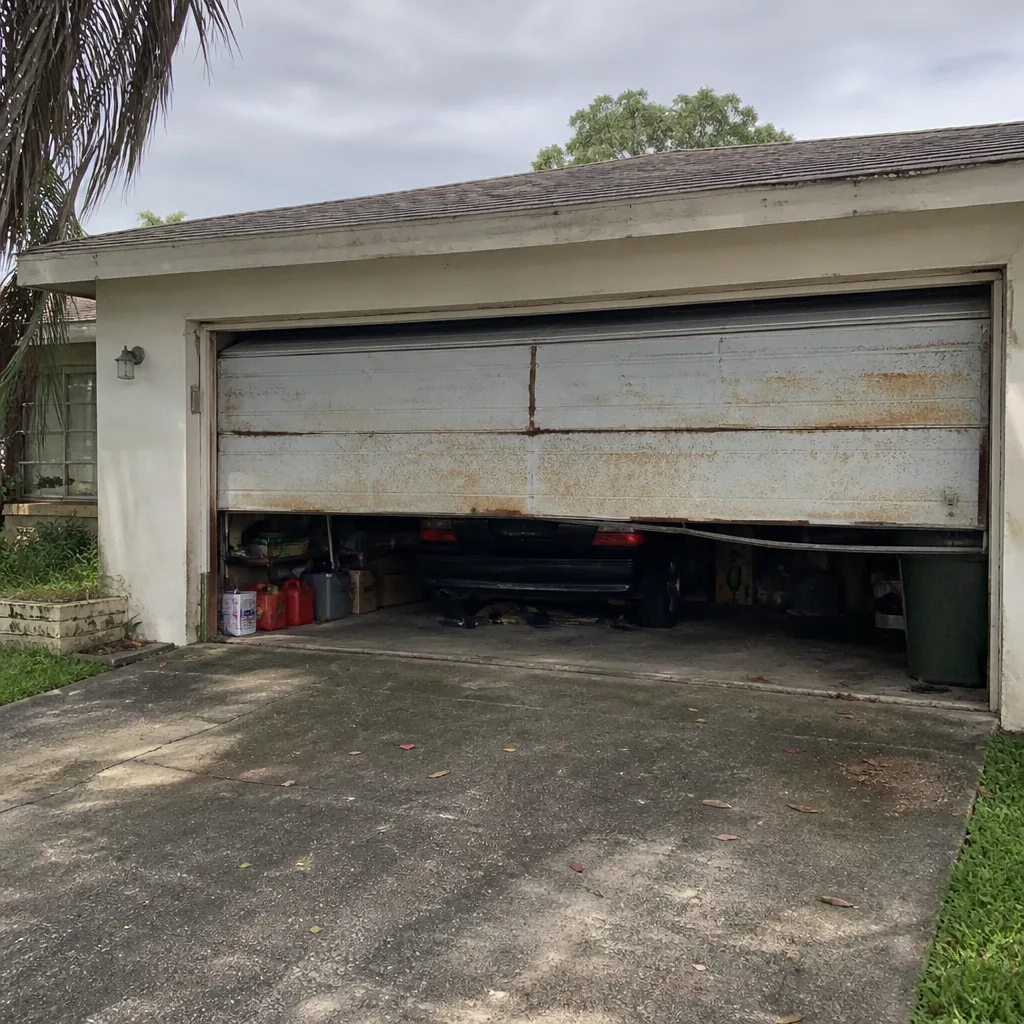 Before
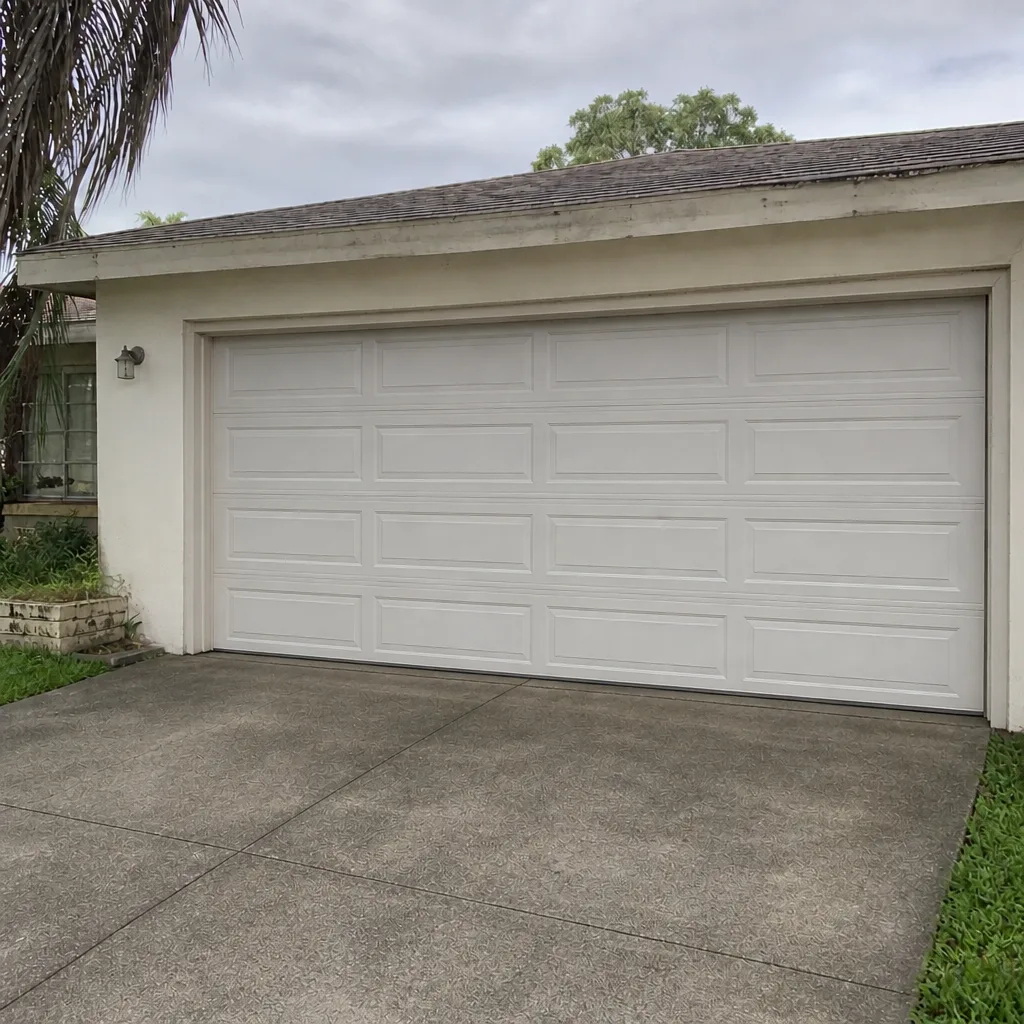 After
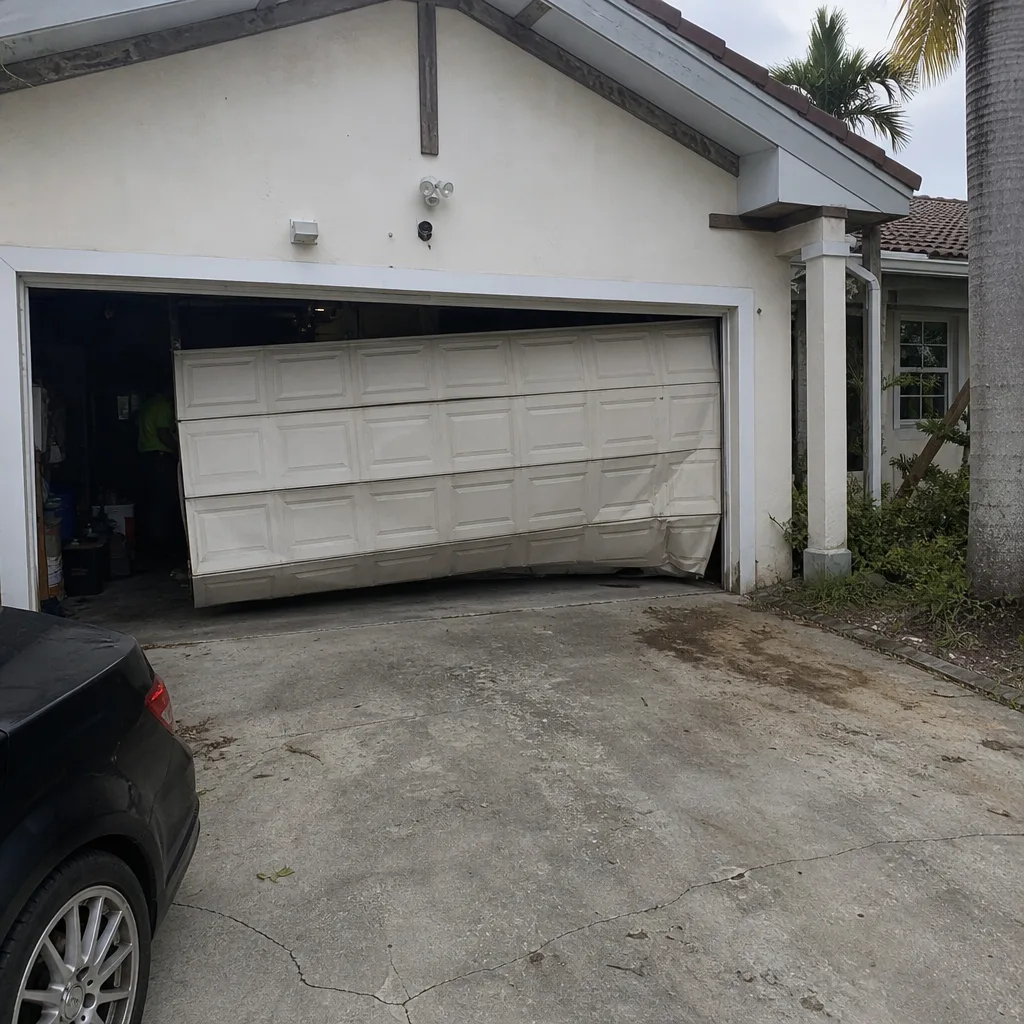 Before
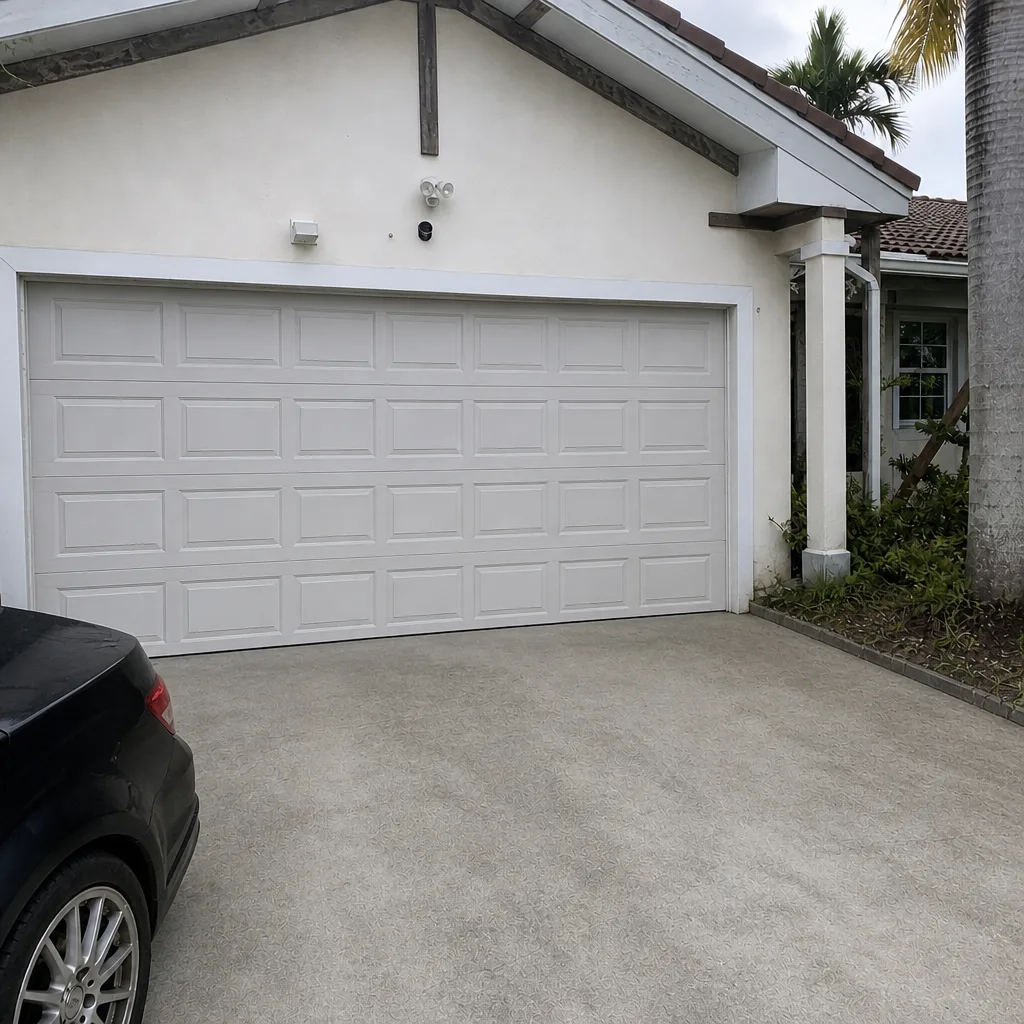 After
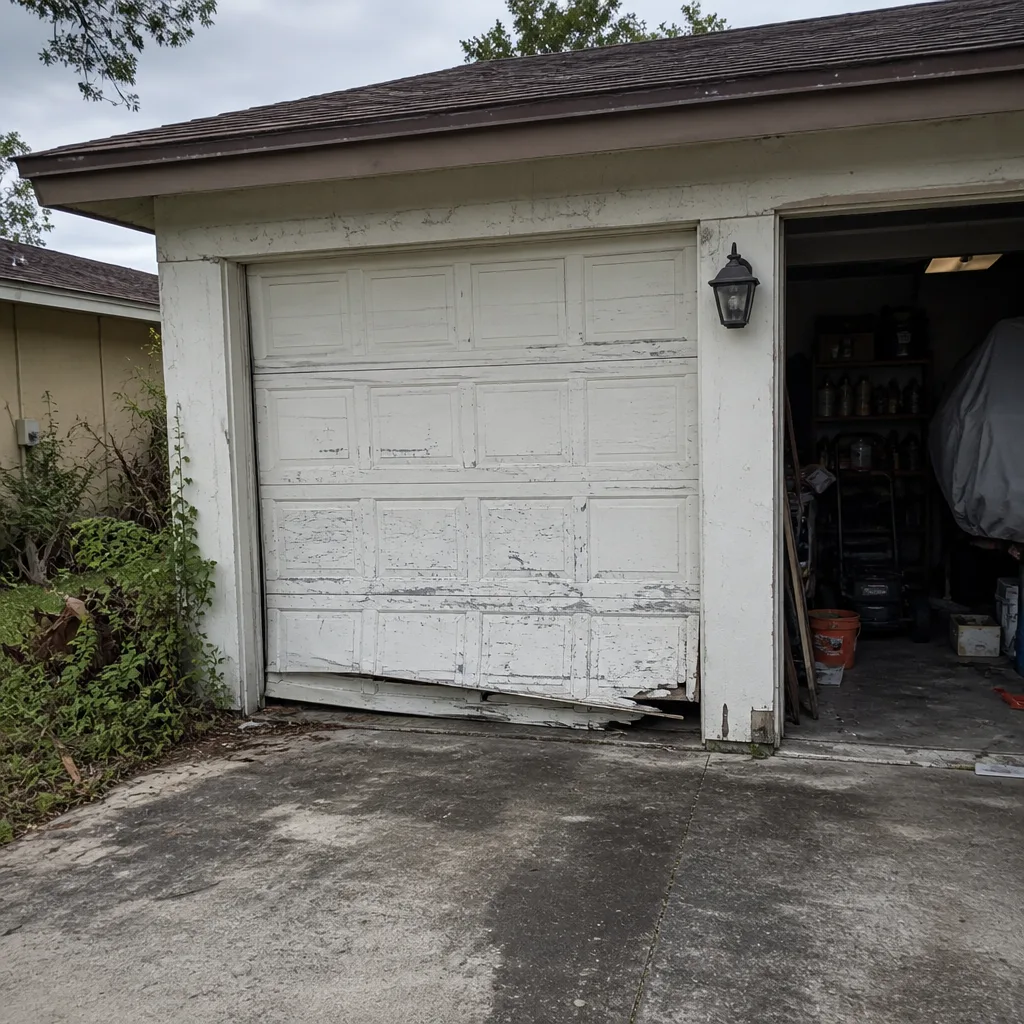 Before
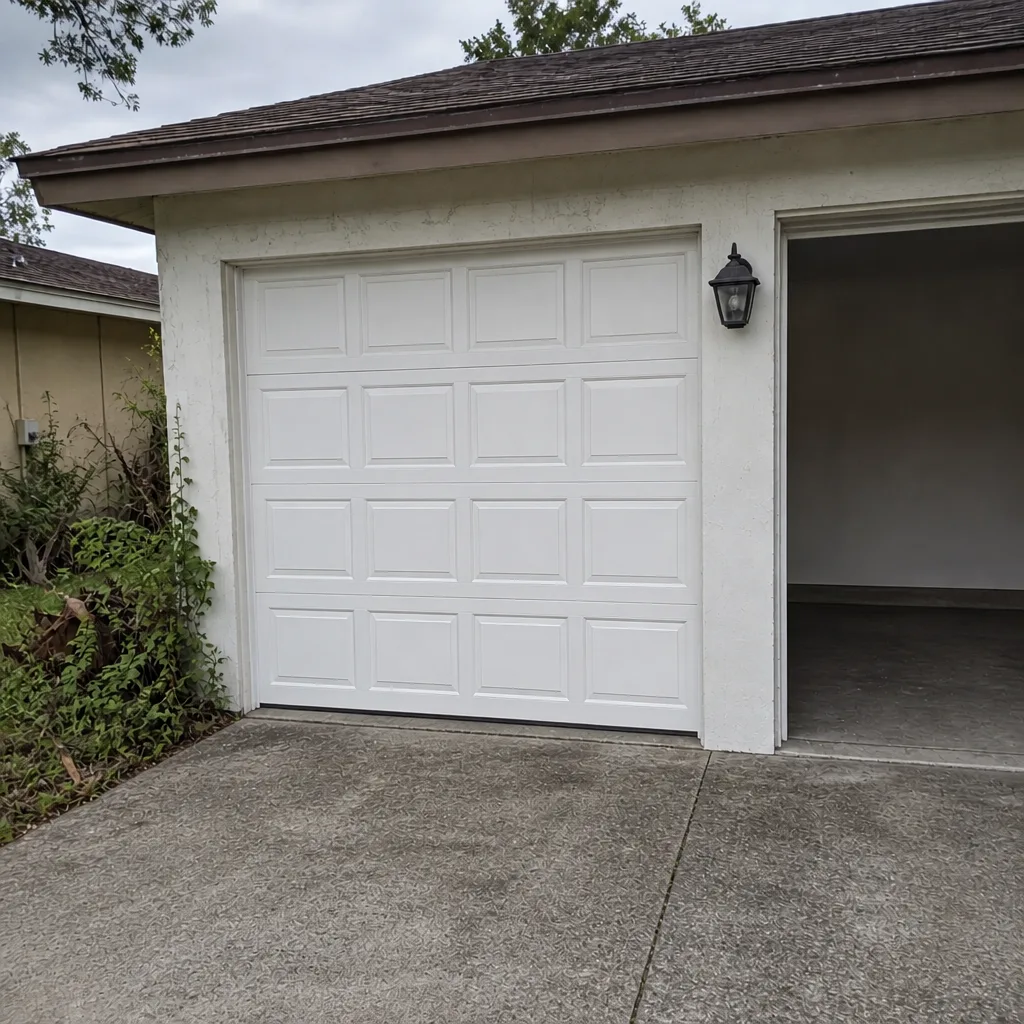 After
When to Call a Professional
Call for repair when the door won’t run, when a spring or cable snaps, when the door is hanging or off the track, when the opener resets or reverses without reason, or when the door is visibly damaged after a storm. Call when a car is trapped, when the door can’t be secured from the inside, and when you’re not certain a door is safe to operate. These are not DIY situations, and in the case of springs and cables, no amount of caution makes them safe to handle without training.
Miramar Garage Door Repair Pros offers free estimates in Miramar. Call (855) 593-6861. We work on the brands you already have, including LiftMaster, Chamberlain, Genie, Clopay, Amarr, Wayne Dalton, Craftsman, and Raynor. We ask the right questions first, explain what’s needed, and agree on a price before any work starts. Our technicians have up to 8 years of experience diagnosing and repairing both mechanical failures and storm damage in Miramar.
Frequently Asked Questions
Check whether the opener has power and whether the safety sensors at the base of the door are aligned or blocked. If power is fine and the sensors look clear, pull the manual release cord to disconnect the door and try lifting it by hand. If it’s heavy, a spring is likely broken, and you should call for repair rather than force it. If the door lifts easily by hand, the problem is in the opener, and that’s a diagnostic repair. In Miramar, we handle both. Call (855) 593-6861 for a free estimate – estimates are free.
Find the release cord hanging from the trolley near the door, and pull the handle straight down toward the door, not toward the motor. This disconnects the door from the opener. On LiftMaster and Chamberlain openers the cord is usually red or black; on Genie and Craftsman models the trolley design is slightly different but the pull direction is the same. The motion is a deliberate pull, not a yank. If the door is heavy after release, stop and call. Call (855) 593-6861 for a free estimate – estimates are free.
Engage a slide lock or deadbolt on both sides of the door, or place a c-clamp on the track above a roller as a temporary lock. Both prevent the door from being lifted from the outside while the opener is dead. What to check before an emergency: make sure your locks actually engage cleanly and that you know where your c-clamps are stored. If your door has no secondary lock, that’s a low-cost hardware upgrade worth making. Call (855) 593-6861 for a free estimate – estimates are free.
Yes, springs and the cables attached to them are under extreme tension and can cause serious injury if they’re cut or released incorrectly. Never attempt to remove, adjust, or loosen a spring or cable yourself. If a spring is visibly broken, don’t touch it and keep others clear of the door. Spring repair requires specialized tools and training, which is why we handle it in-house. Call (855) 593-6861 for a free estimate – estimates are free.
Check that your track bolts are tight, your hinges aren’t rusted, your brackets have no stress cracks, and your door has a wind rating that meets your area’s requirements. Inspectors look at the fasteners and the attachment to the framing, not just the door itself. If your label is missing or your door is old, that’s a conversation to have with your city’s building department. We can inspect the door and advise on repair or replacement. Call (855) 593-6861 for a free estimate – estimates are free.
Yes, most garage door emergencies, including a door stuck closed with a car trapped, a broken spring, a snapped cable, or a damaged track, are handled same-day. We answer 24/7 and dispatch from 7am to 7pm Sunday through Friday. A call outside those dispatch hours is booked into the next opening. Have your door’s brand and model ready when you call, and tell the dispatcher whether a car is trapped. That speeds up the dispatch. Call (855) 593-6861 for a free estimate – estimates are free.
The Bottom Line
Garage door emergency preparedness in Miramar comes down to two plans. The mechanical plan is knowing your door’s brand, knowing how to release and re-engage your opener, and having a way to lock the door from the inside without power. The weather plan is a pre-season check of your bolts, brackets, hinges, and wind rating, plus a clear head about what to do in the first 30 minutes after a storm. Neither plan is expensive. Both are easy to set up. What matters is doing it before you need it, because the door is the largest moving part of your house and the most likely to fail at a bad moment. When it does, call (855) 593-6861. We answer 24/7, with fast dispatch from 7am to 7pm, Sunday through Friday. Estantes are free, and the price is always agreed before any work starts.
Start with the manual release today. Find it, test it, and show everyone in the house how it works. Then check your door’s brand label. If you don’t recognize the brand or the label is gone, we can help identify it. When you’re ready for a full inspection, Miramar Garage Door Repair Pros connects you with vetted local professionals who do this work every day and know Miramar doors.
Written by the team at Miramar Garage Door Repair Pros.
Call (855) 593-6861 for a free estimate.