
Last updated November 22, 2026
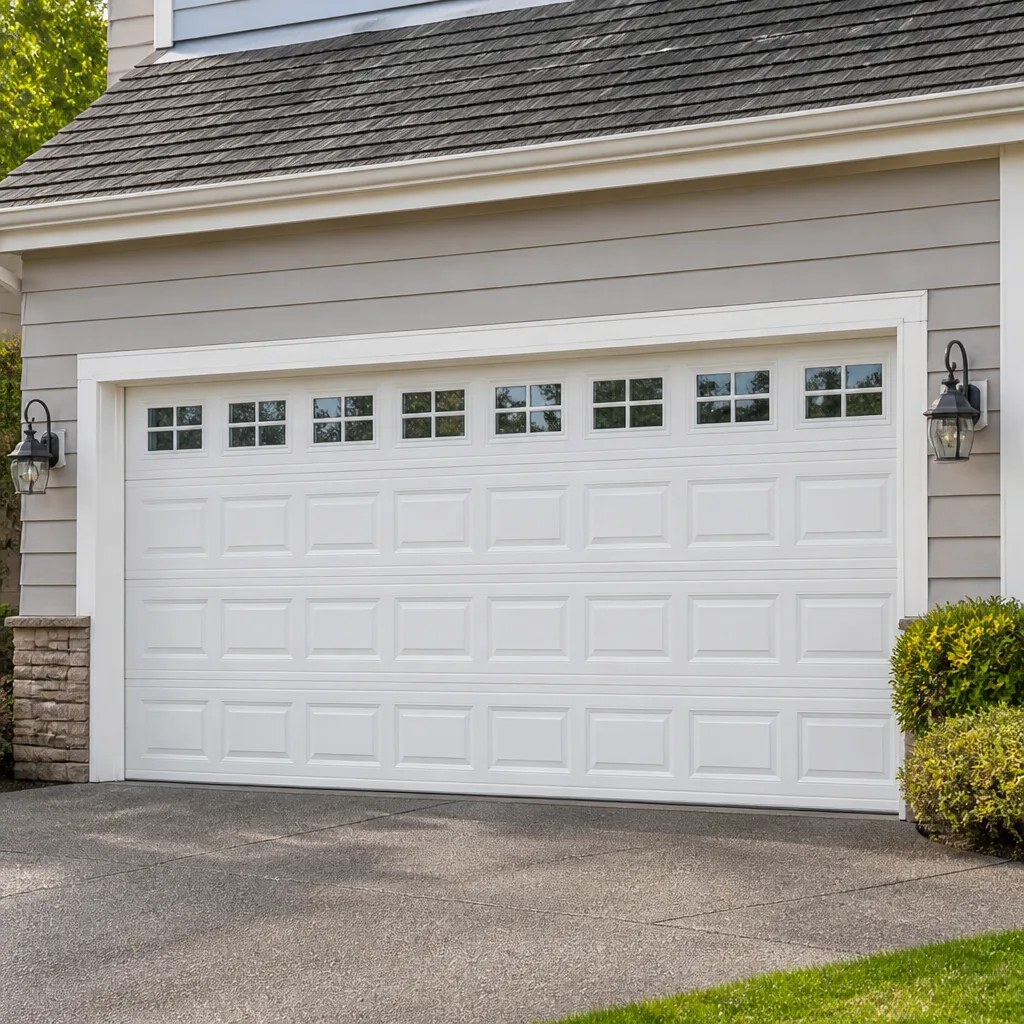 Raised-panel steel
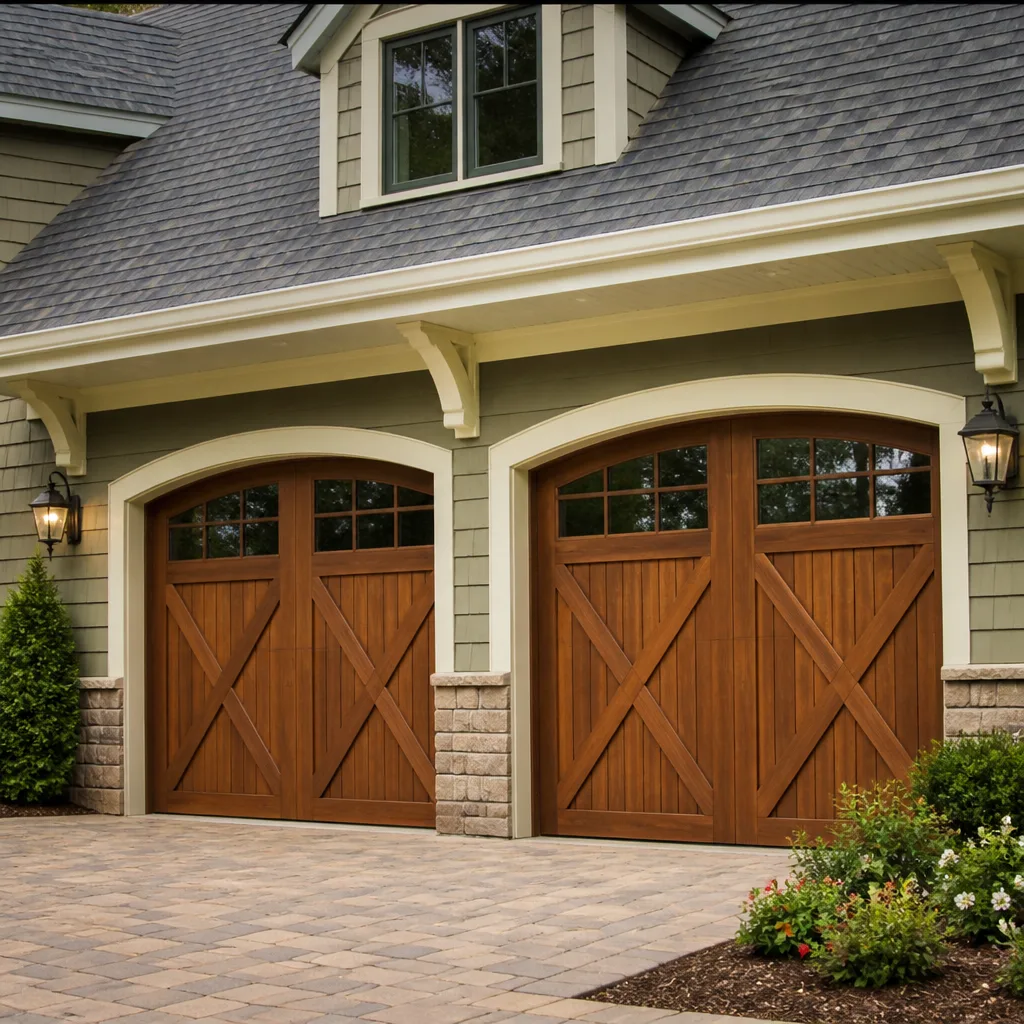 Carriage house
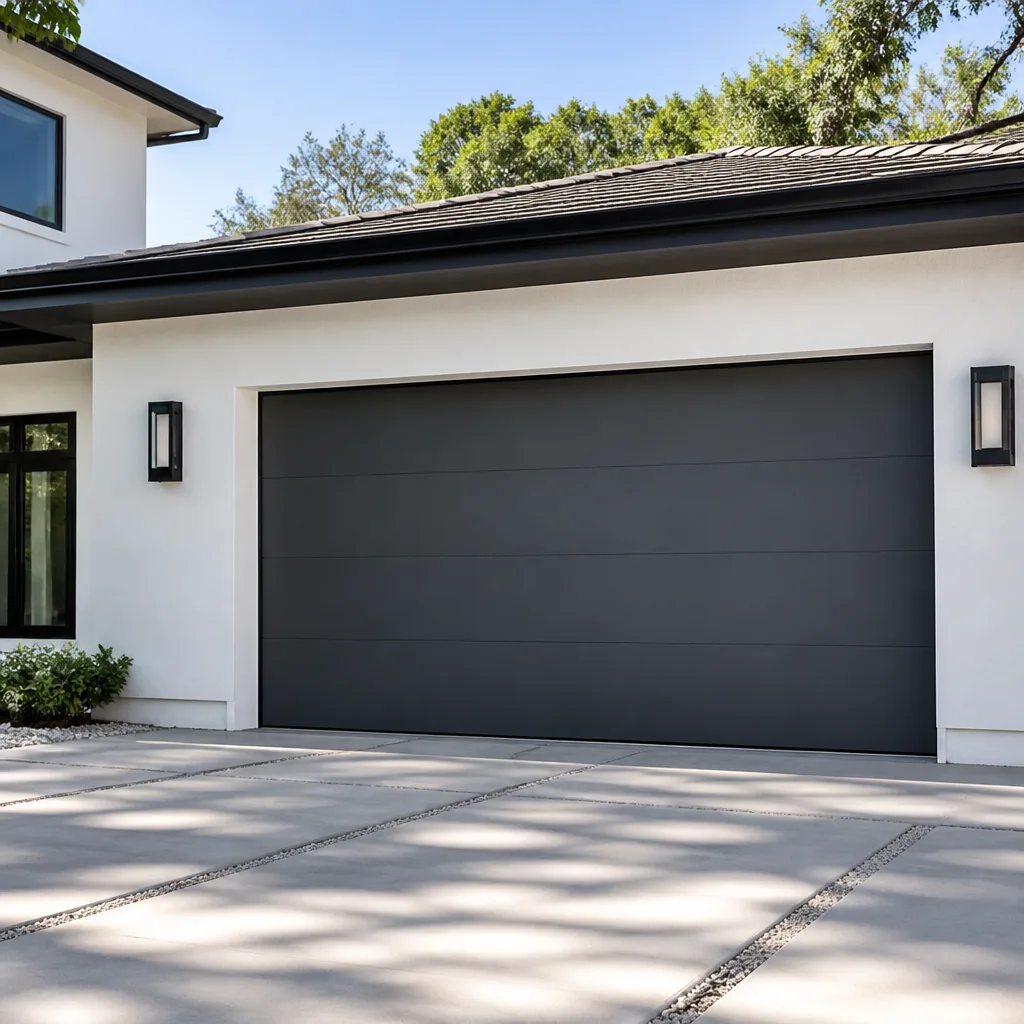 Modern flush
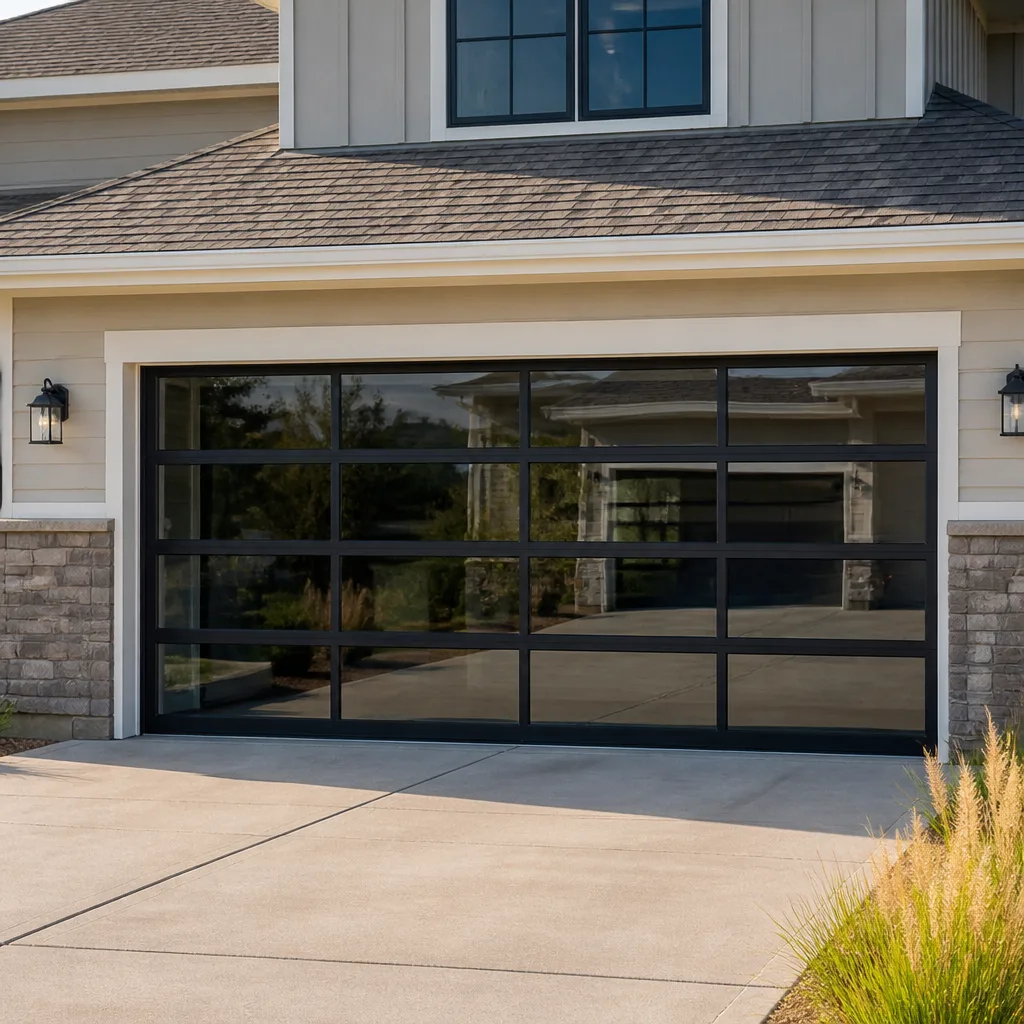 Full-view glass
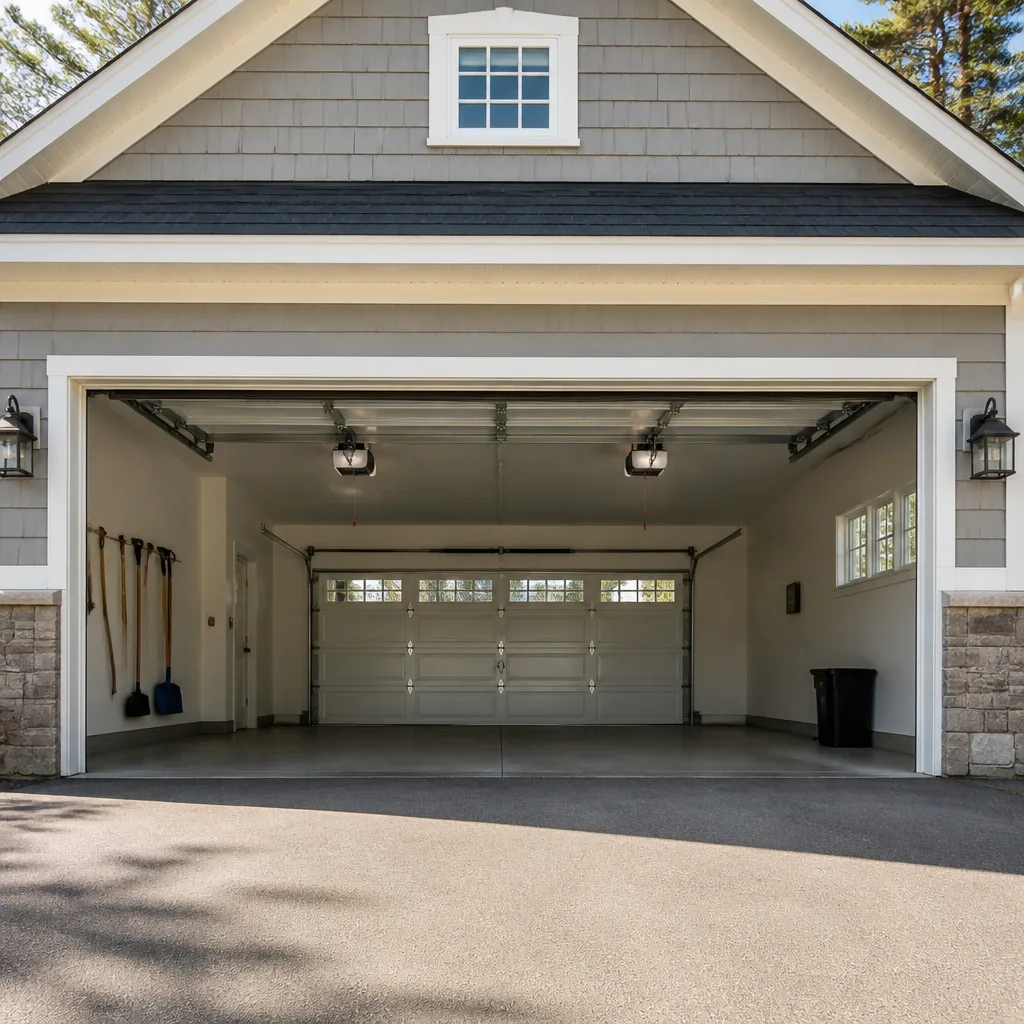 LiftMaster openers
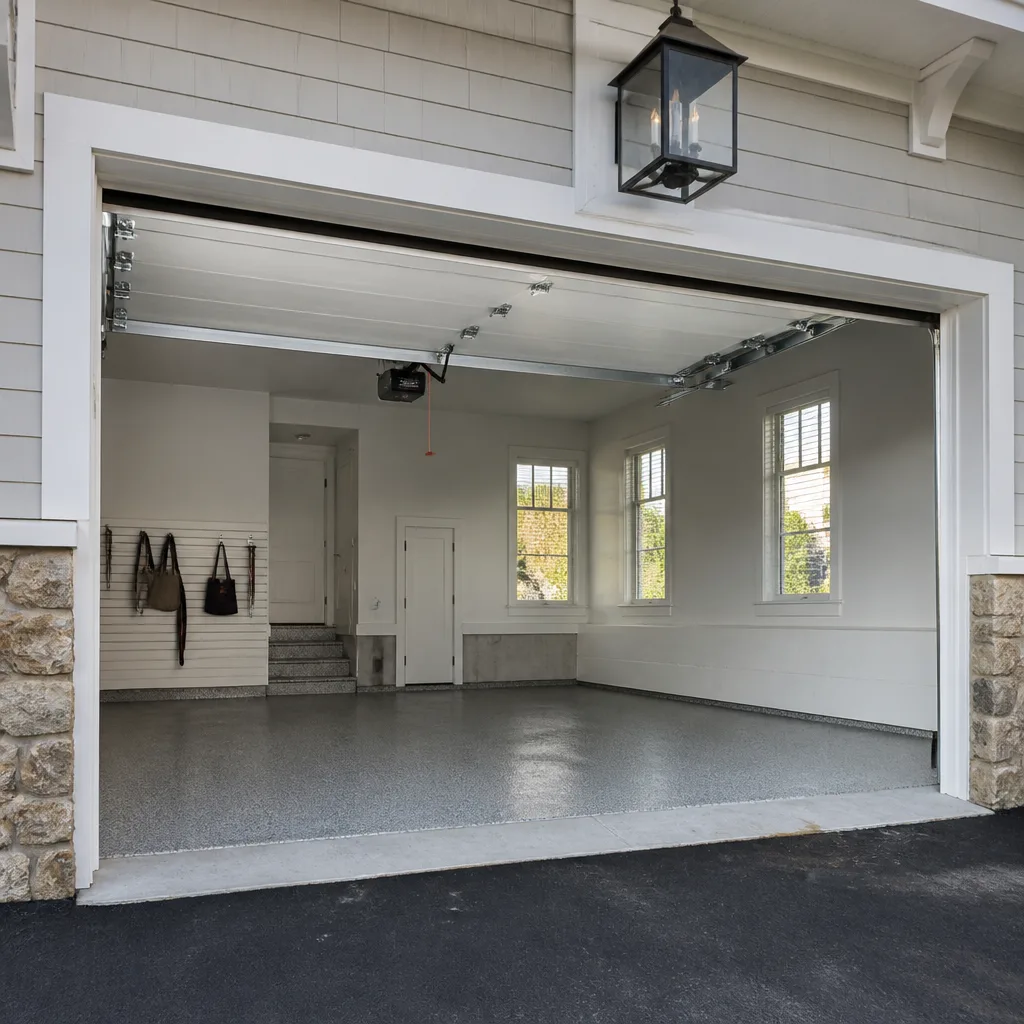 Chamberlain openers
Full 25-point door and opener safety check with every visit - springs, cables, rollers, tracks, and your LiftMaster or Chamberlain opener included
You get a price before we start. It does not change when the pro arrives.
Get your free estimateThe Complete Guide to Garage Doors in Miramar
Most garage door guides treat the door as a single product: you buy a door, it works, it breaks, you fix it. That model falls apart in Miramar, where the door is really four connected systems – springs, opener, panels and tracks, and the seals and brackets that hold them together – and South Florida’s humidity and hurricane exposure wear on all of them at once. The common pattern here isn’t one failure. It’s a homeowner who replaces the opener, then the springs, then the panels in three separate service calls, because nobody evaluated the whole door the first time. This guide maps how each part affects the others, what our Miami-Dade and Broward County wind requirements actually change about door selection in Miramar, and how to read a real system inspection so you can plan a repair or replacement instead of reacting to it.
Quick Answer
A garage door in Miramar should be evaluated as a complete system – springs, opener, panels, tracks, and weather seals – not repaired one part at a time, because humidity and wind exposure here stress every component together. A door that fails a single part is often showing the first symptom of a system that needs a full look. Knowing what each part does and how they load against each other is what keeps you out of repeated, reactive service calls.
Styles & brands we work with
- Raised-panel steel
- Carriage house
- Modern flush
- Full-view glass
- LiftMaster openers
- Chamberlain openers
Table of Contents
- Why Miramar Doors Fail as a System, Not a Part
- How Humidity and Wind Stress Every Component
- Matching Your Opener to Your Spring System
- Wind-Load Ratings and What They Mean for Your Door
- How to Read a Full System Inspection
- Upgrade Paths for 1990s and 2000s Miramar Homes
- Why Brand Coverage Matters in Miramar
- What Homeowners Should and Shouldn’t Touch
Why Miramar Doors Fail as a System, Not a Part
A garage door is a balance machine. The springs carry the door’s weight, the opener only nudges it up and down, and the tracks keep the panels aligned while the seals keep out the weather. Change one and you change the load on all the others. That’s why a door that “just needs a new opener” so often comes back a few months later with a snapped spring or a bent track. The opener was doing work the springs should have been doing, and it masked a spring problem until the spring gave out.
In Miramar, this interlock is tighter than in most of the country. The same warm, humid air that makes a garage feel like a sauna most of the year works on springs, hinges, bottom brackets and fasteners at the same time. When one part weakens, the others start carrying more than their share, and the next failure follows. We see the results of treating the door as separate parts, not a system, all over Miramar.
In our experience, three things cause that. Homeowners call for the visible problem only. A quick estimator quotes the failing part without checking what caused it. And no one writes down the condition of the rest of the system, so nobody notices the pattern.
So the first lesson of this guide is simple: when something breaks, ask what else the door is telling you. A door that shudders on the way down, a spring that’s stretched past its working length, a bottom seal that’s gone hard and cracked – those are one story, not three.
How Humidity and Wind Stress Every Component
South Florida humidity doesn’t just make the garage feel heavy. It’s the main reason garage door hardware in Miramar ages faster than the same hardware would in a drier climate. Moisture in the air settles on the steel of springs, hinges, bottom brackets, and the bolts that hold the tracks together. Over months and years, that moisture rusts the metal and stiffens the moving parts, which adds friction to a system that was balanced when it was installed.
Wind compounds it. Even on an ordinary breezy day, a garage door’s panels flex slightly, and the seals that block rain and bugs take the brunt of it. A seal that’s gone stiff from heat and humidity stops sealing well, which lets moisture into the track channel and the door’s edges. That moisture is exactly what corrodes the springs and bottom brackets. Every part makes the next part work harder.
Here’s what that means in practice for a Miramar door:
- Springs rust at the coil and lose strength sooner than the manufacturer’s cycle rating suggests, because corrosion eats into the wire.
- Bottom brackets and hinges seize up as rust builds, which strains the opener and the springs.
- Weather seals harden and crack, letting humid air and rain in behind the door.
- Tracks collect grit and rust, which throws the panels out of alignment and makes the door noisy.
- Fasteners loosen as the door flexes in wind, which lets the whole assembly drift out of square.
None of these happen in isolation. The homeowner who lives with a noisy, stiff door for a season is usually living with two or three of these at once. That’s why we diagnose first and recommend after – a single-component visit misses the connections.
One practical habit: wipe down the springs and hinges and check the bottom bracket for rust every few months. It won’t undo a failing spring, but it tells you when the door is asking for attention, and it lets you call before something snaps.
Matching Your Opener to Your Spring System
Most opener shopping starts with brand. It should start with torque load. An opener’s job is to lift a door that the springs have already balanced to nearly weightless. If the springs are the right size and tension, a modest opener does the work easily. If the springs are undersized or have lost tension, even a powerful opener strains to lift the door, and the extra load finds its way into the gears, the motor, and the panels.
That’s why we never recommend an opener based on brand preference alone. We check what the springs are actually carrying, how much the door weighs, and how the door travels before we suggest anything. The right opener is the one matched to a correctly balanced door – not the one with the most horsepower.
This is where our brand coverage earns its keep. We work on LiftMaster, Chamberlain, Genie, Craftsman, and the rest of the major brands you’ll find on Miramar doors, and we’re trained on how each brand’s drive systems and safety sensors behave. A door with an older Craftsman opener and a newer Clopay door needs a different approach than a Wayne Dalton door with a LiftMaster chain drive. The parts don’t have to match by brand; they have to match by load. When you need garage door opener repair, we look at the opener and the springs together, because a strain problem on one is usually a balance problem on the other.
Three signs an opener is being asked to do too much:
- The door hesitates or stalls partway up, especially in the first few feet.
- The opener’s motor housing feels hot after a single cycle.
- The door reverses on its own before it reaches the floor.
Any of those means the opener is fighting the door, and the fix is usually in the springs or the tracks, not in a new motor.
Wind-Load Ratings and What They Mean for Your Door
If you own a home in Miramar, you’ve probably heard the phrase “wind-load rating” or “hurricane-rated door” without anyone explaining what it actually decides. In plain terms, a wind-load rating is a measure of how much pressure a door assembly – panels, tracks, brackets and reinforcement – can withstand before it fails. Because Miramar sits in Miami-Dade County, homes here fall under some of the strictest wind requirements in the country, and that has a direct effect on which panels and tracks you can put on your house.
For a homeowner, the rating matters in three places:
- Replacement: a new door on a Miramar home has to meet the wind-load requirement that applies to your property, so the panel you pick isn’t a free choice.
- Repair: replacing a single panel with a mismatched one can weaken the assembly’s rated performance, even if it looks right.
- Track and bracket selection: the tracks and the way the door is anchored to the wall are part of the rated system, not accessories.
This is one of the reasons we push back on the piecemeal approach. A door isn’t hurricane-rated because it has strong panels. It’s rated because the whole assembly – panels, tracks, brackets, and the anchoring – was designed and installed to work together. Swapping one part for a different one can quietly undo that.
Our advice on the specifics: ask your city’s building department which requirement applies to your property, and get the door’s rating documentation with the estimate. Don’t take a verbal “it’s hurricane-rated.” The paperwork is the thing that counts, especially if you ever sell the home. When it’s time for a new door, that documentation should come with the install, and it’s part of how we handle a garage door repair or replacement in Miramar.
How to Read a Full System Inspection
A full system inspection looks different from a quick-visit quote, and the difference is worth learning because it’s the single best way to avoid three service calls where one would do. A quick estimator looks at the problem you called about and quotes it. A thorough technician checks the door as a whole – because the problem you called about is often not the problem you have.
Here’s what a real inspection covers, in the order a competent technician works:
- Balance test: the door is raised partway and released to see whether it holds or drifts, which tells you if the springs are carrying the door’s weight correctly.
- Spring assessment: coil condition, rust, and the number of cycles the springs have likely seen, plus whether they’re the right size for the door.
- Opener load test: whether the opener is doing its share or fighting the door, plus safety sensor alignment and reverse function.
- Panel and track check: alignment, looseness, bent channels, and whether the panels are the ones rated for the door.
- Hardware and seal check: hinges, rollers, bottom brackets, fasteners, and the condition of the weather seals.
- Written findings: what’s failing now, what’s aging, and what can wait – in order of priority.
Ask for that written list. A technician who checks the springs, the opener, the tracks and the seals should be able to tell you which part is failing now and which is next. If a quote only addresses the part you pointed at, with no assessment of the rest, you’re looking at a quick-visit estimator, not an inspection.
In our experience, the difference shows up most on doors in Miramar that are 15 to 20 years old. Those doors usually have two or three parts near the end of their life at the same time, and a one-part quote just staggers the failures a few months apart.
Upgrade Paths for 1990s and 2000s Miramar Homes
Plenty of Miramar homes were built in the 1990s and 2000s, and a good number still have their original garage door. Those doors are now at or near the end of their working life. That doesn’t always mean a new door, but it’s the age range where the decision between repair and replacement gets real, and where owners benefit most from a system-level look.
There’s no single answer, but there are three paths we typically walk through with homeowners:
- Repair what’s failing and keep the door: the right call when the panels and tracks are still sound and the springs and opener are the only parts that are tired. Often the most economical short-term route, provided the rest of the system has life left.
- Repair the system, upgrade the opener: when the door itself is solid but the opener is an older model with no safety reverse or no smart-home compatibility. We work on the modern WiFi-enabled LiftMaster, Chamberlain and Genie systems, so this path keeps the door and modernizes the controls.
- Full replacement: when panels are out of square, tracks are bent, and the door is no longer rated for the wind requirements that apply to your property. At that point the repair costs stack up faster than a new, correctly-rated door.
The old door on a 1990s or 2000s Miramar home is often a plain steel door with a builder-grade opener. The upgrade conversation isn’t about picking a fancier door. It’s about whether the existing assembly can keep doing its job in this climate and this wind zone. If it can’t, we say so. If it can, we’ll repair it and hold the replacement until it makes sense.
For property managers with multiple units, this is the most useful conversation of all. A building-wide pattern of door ages means a building-wide plan, and knowing each door’s condition up front is how you avoid a wave of emergency calls.
Why Brand Coverage Matters in Miramar
Garage doors and openers come from a handful of manufacturers, and each one uses its own drive systems, its own sensors, its own spring configurations. A technician who knows one brand well will still struggle on another, and the honest fix for a Wayne Dalton door isn’t the same as the fix for a Clopay or an Amarr.
We work on the brands most Miramar homeowners already have: LiftMaster, Chamberlain, Genie, Clopay, Amarr, Wayne Dalton, Craftsman, and Raynor. That’s not a marketing list. It’s the practical reason one call can resolve the whole problem. Whether your door is a builder-grade steel model or a newer insulated design, the diagnosis comes first, and the recommendation follows from what the door needs.
Our technicians have up to 8 years of experience across those systems, and they’re trained on competing manufacturer setups. That matters most when a door has mixed parts – a Craftsman opener on a Clopay door, say – because the right advice often crosses brand lines.
It’s also why we handle spring work in-house. Springs are the most dangerous part of the system, and referring that out mid-repair would mean starting over on the diagnosis. When you call garage door spring repair, it’s the same team evaluating the rest of the door.
What Homeowners Should and Shouldn’t Touch
Some garage door maintenance is safe and worth doing yourself. Some isn’t. Knowing the line keeps you out of the emergency room.
Safe for a homeowner:
- Wiping down springs, hinges and bottom brackets and checking for rust.
- Testing the opener’s safety reverse function with a small object in the door’s path.
- Clearing grit and debris from the track channels.
- Checking that the weather seal at the bottom of the door hasn’t hardened or split.
- Looking and listening for wobble, noise, or a door that doesn’t travel straight.
Not safe for a homeowner: anything involving the springs, cables, bottom brackets, or the track’s mounting. A torsion spring is under enormous tension, and a spring that lets go can cause serious injury. Adjusting it, unwinding it, or trying to replace it without the right winding tools and training is a genuine hazard. The same goes for the cables that run alongside the springs. If your door’s problem is a spring or a cable, stop and call a trained professional. That’s not a line to sell you a service – it’s the one part of a garage door system that routinely sends people to the hospital.
If your door is stuck open or shut and you can’t safely fix it, the emergency line is there for exactly that. Call (855) 593-6861. We answer 24/7. Fast dispatch from 7am to 7pm, Sunday through Friday.
Common Mistakes to Avoid
- Replacing the opener when the springs are the problem. A strained opener is usually a symptom of tired springs. Fix the springs first and the opener often performs like new.
- Quoting one panel on a door that needs a system look. A single panel replacement on a Miramar door can interfere with the assembly’s wind rating. Check the whole system before you swap parts.
- Skipping the balance test. If a technician doesn’t lift the door and release it to see how it behaves, they’re guessing at the spring condition. It’s a two-minute check and it’s the first thing a real inspection does.
- Ignoring a noisy door. Noise in a humid climate usually means rust and friction, and friction wears out the parts run by the opener. Silence the cause, not the symptom.
- Letting seals go until they crack. A hard, split weather seal lets humid air into the track channels and behind the door, which accelerates corrosion on the springs and brackets. Replace seals when they start to stiffen.
- Buying an opener by brand alone. The opener must match the door’s weight and spring balance. Brand preference without a load check leads to premature motor failure.
- Skipping the written findings. If you don’t get a written list of what’s failing and what’s next, you can’t plan. Ask for it, and keep it for next time.
See the difference
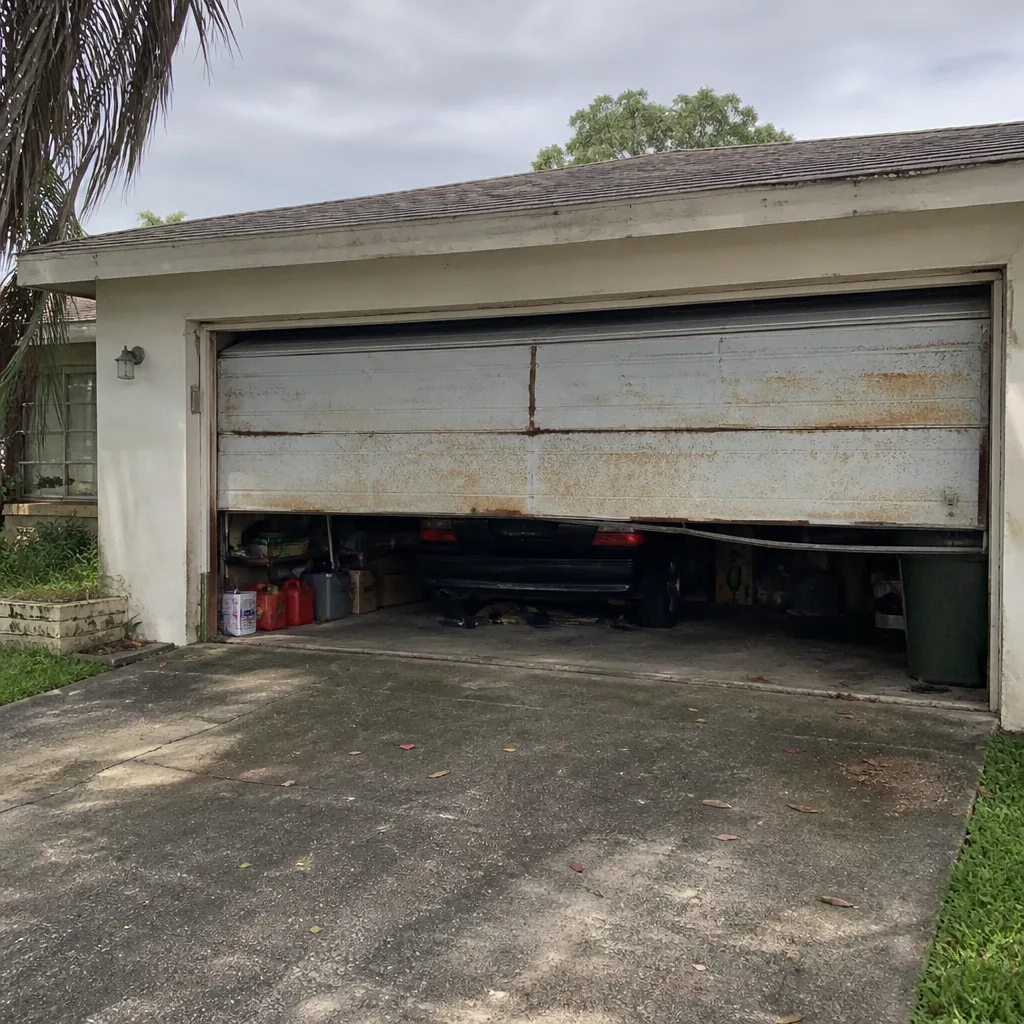 Before
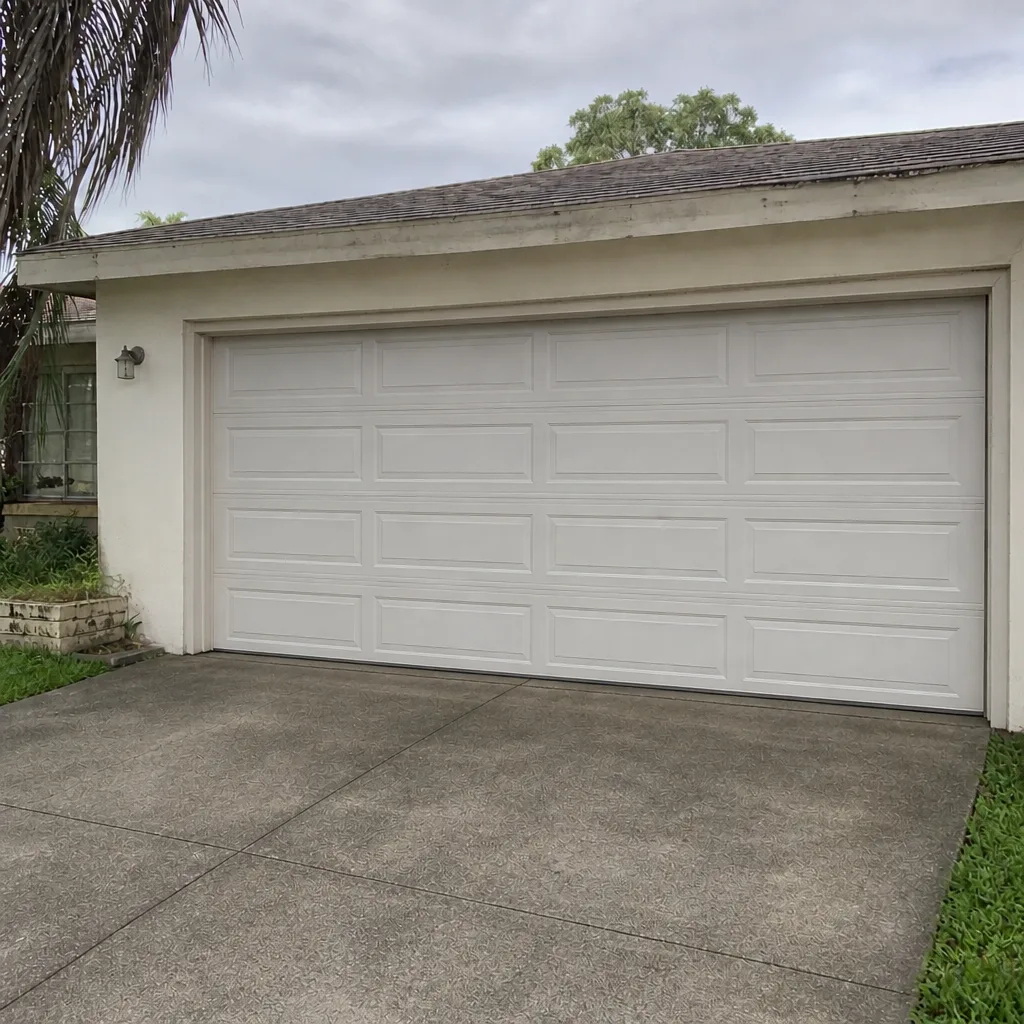 After
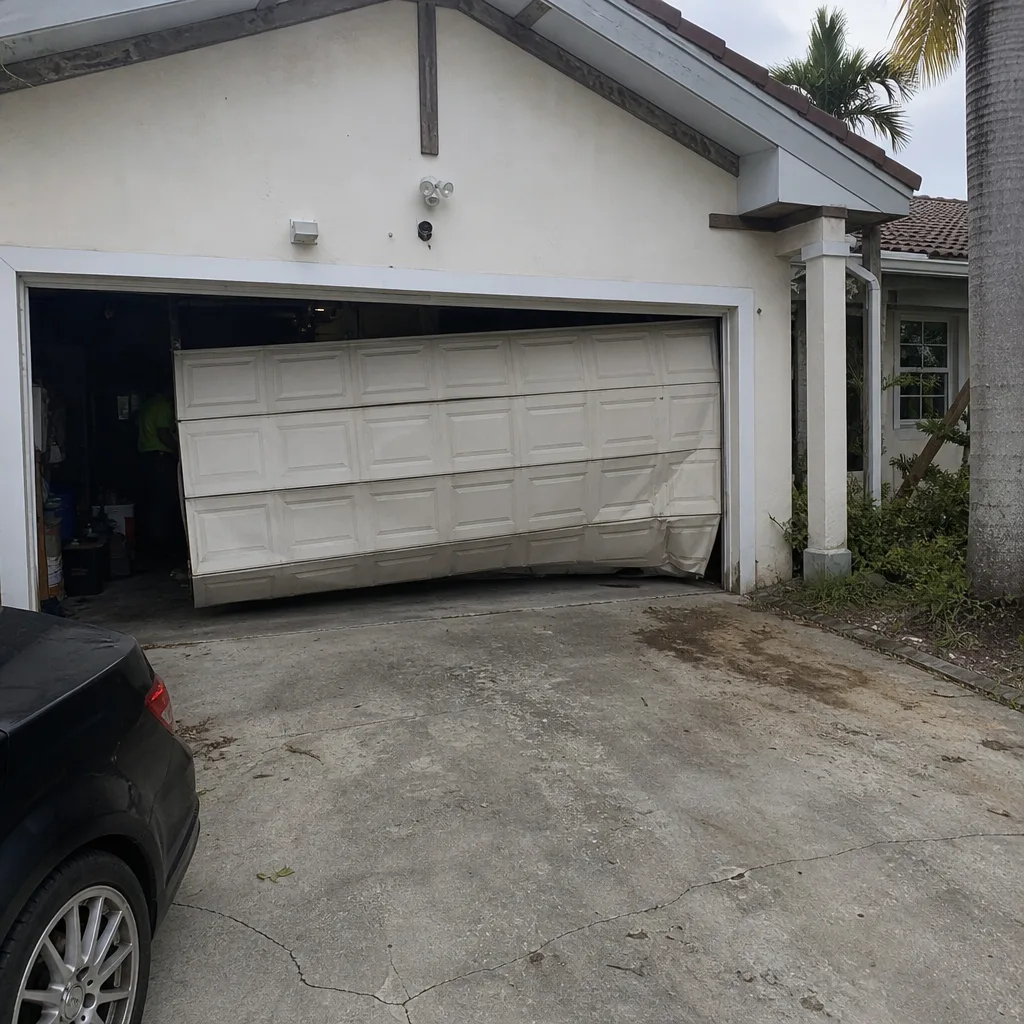 Before
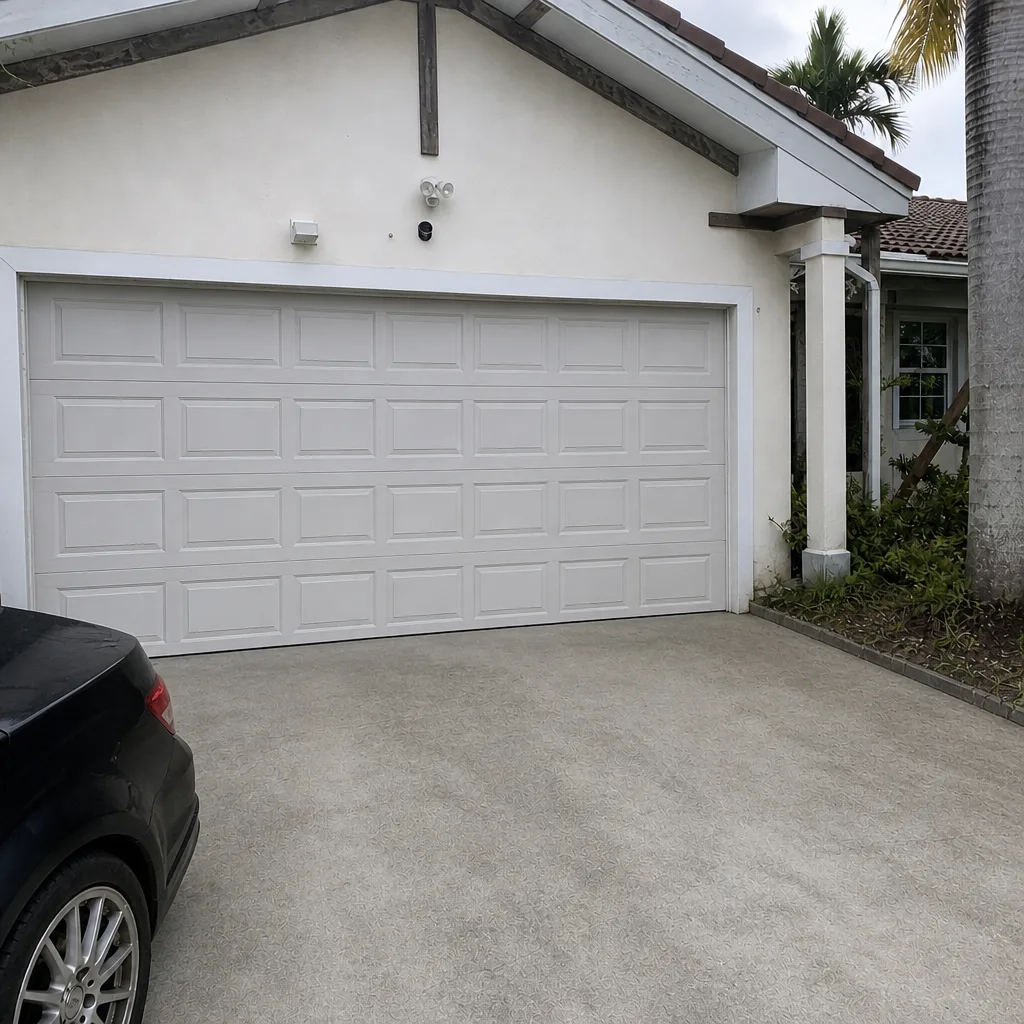 After
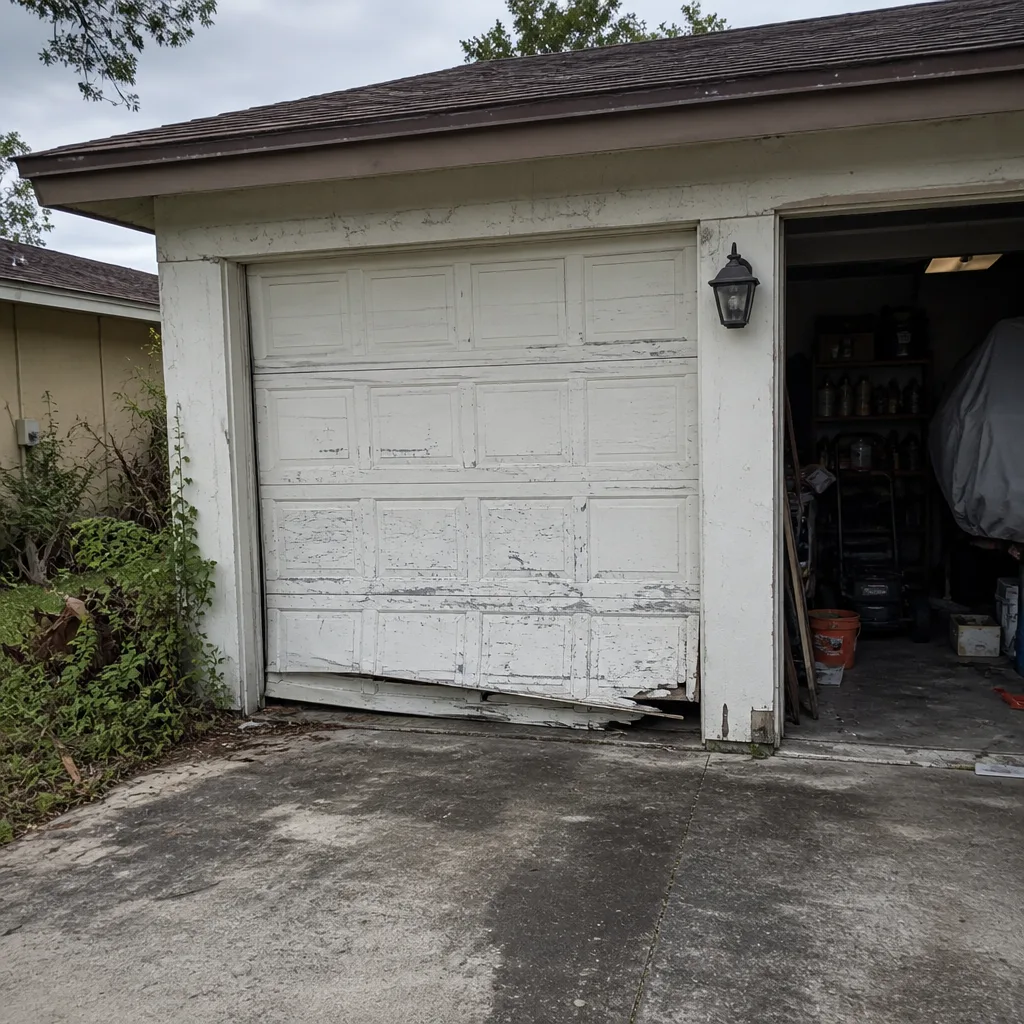 Before
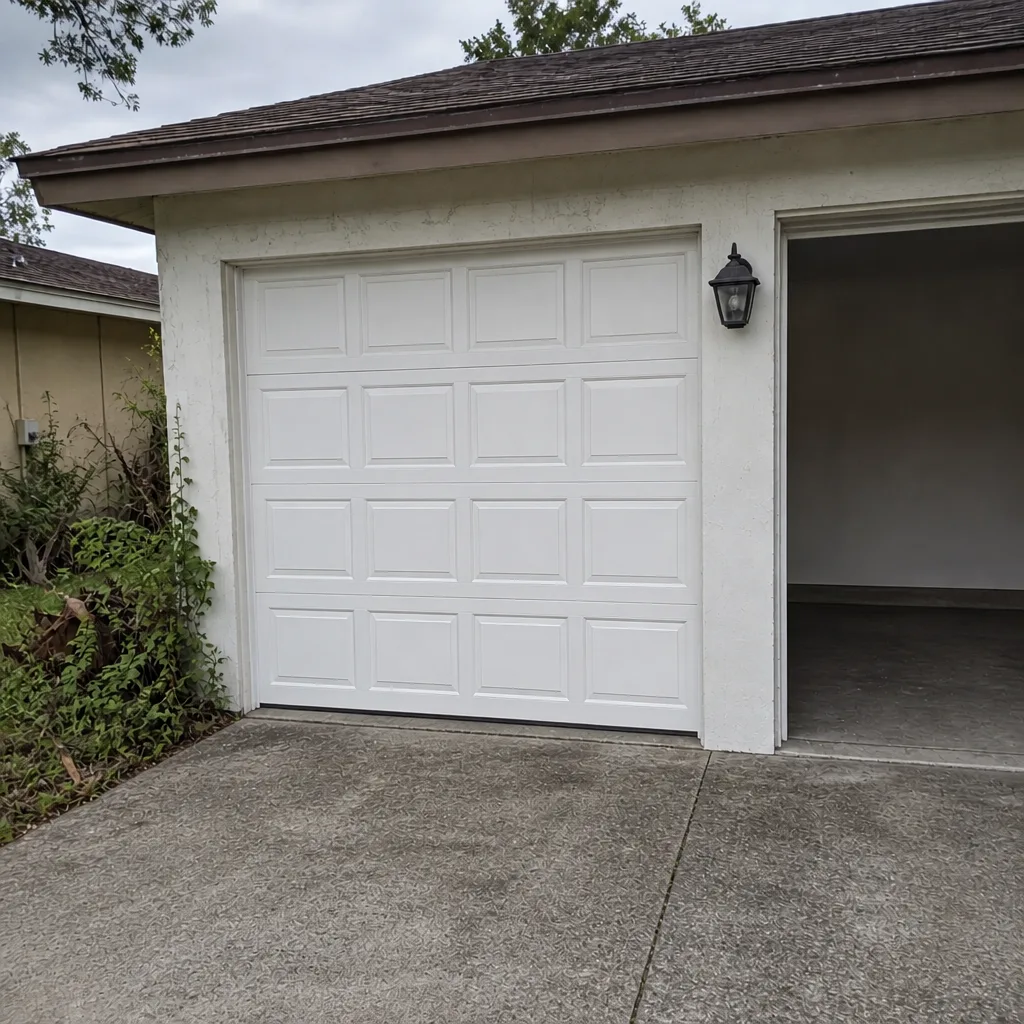 After
When to Call a Professional
Call a professional when the door won’t travel evenly, when you hear a pop or bang from the spring area, when the door hangs crooked, or when the opener reverses for no reason and won’t stay shut. Call when you see rust creeping into the coils or the bottom brackets, when the door won’t stay up on its own, or when a panel is bent and the door no longer seals. And always call when the spring or cable is the problem – those are not homeowner jobs.
Miramar Garage Door Repair Pros offers free estimates in Miramar – call (855) 593-6861. We answer 24/7. Fast dispatch from 7am to 7pm, Sunday through Friday. The price is always quoted and agreed before any work starts, and the written estimate sets the final price. If a door fails on a Saturday, we’re closed that day – call and we’ll get you booked into the next opening.
Frequently Asked Questions
Most common garage door repairs in Miramar fall in the range of a few hundred dollars per job, and the exact price depends on the part, the door’s age, and what the inspection finds. Springs, openers, and panel work are priced separately because they’re different jobs. The written estimate sets the price, and it’s free. Call (855) 593-6861 for an exact quote – estimates are free.
Often, yes – same-day service is available for repair calls, and emergency service is a structured part of what we do. We answer 24/7. Fast dispatch from 7am to 7pm, Sunday through Friday. A call outside dispatch hours is booked into the next opening. Call (855) 593-6861 to get on the schedule.
No. The price is quoted and agreed before any work starts, and the written estimate sets the final price. If the inspection finds more than the original call suggested, you’ll get a revised written estimate to approve before anything changes. Call (855) 593-6861 for a free estimate.
The local pros we connect you with are licensed and insured as their state requires. Our technicians have up to 8 years of experience, and we work on the brands you already have – LiftMaster, Chamberlain, Genie, Clopay, Amarr, Wayne Dalton, Craftsman and Raynor. Call (855) 593-6861 to talk through your door.
Homes in Miramar fall under Miami-Dade County’s wind-load requirements, and a new or replacement door has to meet the requirement that applies to your property. Because it’s property-specific, ask your city’s building department which one covers your address and get the rating documentation with the estimate. Call (855) 593-6861 if you want the rating checked as part of a door evaluation.
Most opener problems can be repaired, especially when the opener is being strained by tired springs rather than being worn out itself. We check the spring balance first, then decide. When you need garage door opener repair, we work on the major WiFi-enabled systems and older chain drives alike. Call (855) 593-6861 for a free estimate.
The Bottom Line
Your Miramar garage door is a system, not a stack of parts. Springs carry the weight, the opener lifts a balanced door, panels and tracks hold the wind line, and seals keep the humidity out. When one part fails, the others are already working harder, which is why the three-call pattern happens – and why a full system inspection catches it before it starts. Work on the brands you already have, match the opener to the load, respect the wind requirements, and leave the springs to a trained professional. That’s the whole guide in a paragraph. If you’re ready for a real evaluation, call (855) 593-6861. We answer 24/7. Fast dispatch from 7am to 7pm, Sunday through Friday. Free estimates, and the written estimate sets the price.
Written by the team at Miramar Garage Door Repair Pros.